Average call handling time in seconds

This measure calculates the amount of time an agent spends handling a call. It is part of a set of Cycle Time measures that help companies optimize the performance of their "plan and manage customer service operations" process by minimizing waste and refining resource consumption.

Benchmark Data

Lock

Sorry! Not all users have access to all our resources. If you are not logged into your APQC account, please log in and try accessing again

Not a member yet? Members have access to all of our resources.

Learn about Membership Arrow with stem

Measure Category:
Cycle Time
Measure ID:
100124
Total Sample Size:
275 All Companies
Performers:
25th Median 75th
- 590.0 -
Key Performance Indicator:
Yes

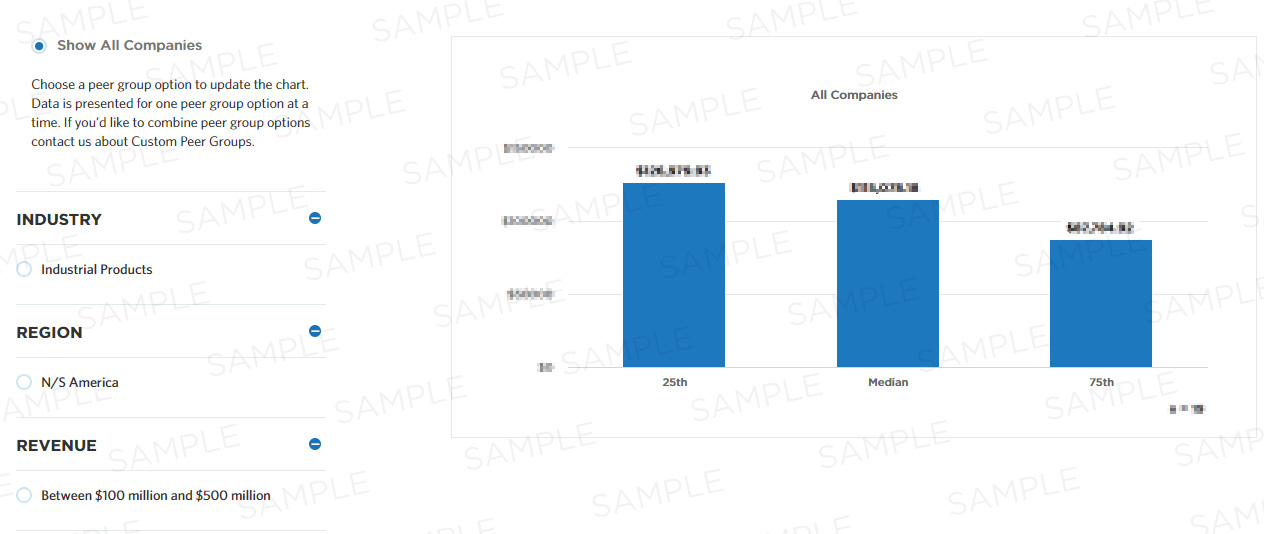
Sample image showing interactive filters for more detailed measure peer group data and an interactive graph.

Compute this Measure

Units for this measure are seconds.

Back to Top

(Average after-call work time in seconds + Average talk time in seconds)

Key Terms

Back to Top

Cycle time is the total time from the beginning of the process to the end. This includes both time spent actually performing the process and time spent waiting to move forward.

The metric value which represents the 50th percentile of a peer group. This could also be communicated as the metric value where half of the peer group sample shows lower performance than the expressed metric value or half of the peer group sample shows higher performance than the expressed metric value.

Measure Scope

Back to Top

Cross Industry (8.0)

  • 6.2.1 - Plan and manage customer service workforce (10387) - Creating and administering the workforce deployed for the customer service process. Forecast the customer workforce needs to correctly schedule the workforce. Track the utility of the workforce deployed. Examine the interactions between the customer and customer service representatives to achieve high quality.
    • 6.2.1.1 - Forecast volume of customer service contacts (10390) - Projecting the total workforce required to service customer service inquiries in order to effectively predict the volume of vendor contracts required. Estimate the number of the customer service contracts in an agreed-upon time frame in order to strategically maintain the workforce necessitated for customer inquires. Analyze historical data around customer service contracts, the universe of customer inquiries, frequency of inquiries, servicing capability (per head) of the employees, etc.
    • 6.2.1.2 - Schedule customer service workforce (10391) - Deploying the workforce to manage customer service contracts. Create a systematic summary of the operations and service required, as well as the specific amount of workforce that is to be deployed to the customer service operations. Ensure workforce is directly proportional to the estimated forecast of customer service contracts.
    • 6.2.1.3 - Track workforce utilization (10392) - Tracking the utilization of workforce deployed for managing customer service operations. Monitor the utility of the workforce deployed for managing customer service operations in order to evaluate its efficiency and cost effectiveness. Calculate the overall labor effectiveness, which measures the utility, performance, and quality of the workforce.
    • 6.2.1.4 - Monitor and evaluate quality of customer interactions with customer service representatives (10393) - Tracking and determining the quality of interactions between the customer and customer representatives. Use technology, including artificial intelligence (AI), to record and effectively assess customer representatives' interactions.
  • 6.2.2 - Manage customer service problems, requests, and inquiries (10388) - Handling the requests and inquiries from customers that seek information regarding the organization's products/services. Obtain the customer requests online and by phone. Direct these requests to higher-level representatives. Approve requests, and respond to customers.
    • 6.2.2.1 - Receive customer problems, requests, and inquiries (10394) - Receiving requests for information from customers over multiple channels. Receive various requests and inquiries from customers regarding products/services. Accept these inquiries through channels such as email, telephone, online forms, text messages, social media, and in person. Supply dedicated equipment, systems, and personnel.
    • 6.2.2.2 - Analyze problems, requests, and inquiries (13482) - Analyzing various requests and inquiries from customers regarding products/services. Provide answers and offerings to satisfy the customer's needs.
    • 6.2.2.3 - Resolve customer problems, requests, and inquiries (10395) - Routing customer inquiries in order to service them with the most apposite response. Direct customer inquires to the best suited personnel or system. Have a system or procedure capable of efficiently channeling these requests.
    • 6.2.2.4 - Respond to customer problems, requests, and inquiries (10396) - Responding to customer requests by email, conversation, interactive voice response, mail, etc. with the most appropriate reply. Instill a robust process to locate the right information for a solution to a customer's problem.
    • 6.2.2.5 - Identify and capture upsell/cross-sell opportunities (16928) - Utilizing customer inquiries as opportunities to either provide a comparable service to the one in question, offer additional complimentary service, or suggest a service that is better than what was initially offered.
    • 6.2.2.6 - Deliver opportunity to sales team (16937) - Providing possible sales leads to the sales team in an effort to garner more business opportunities.
  • 6.2.3 - Manage customer complaints (10389) - Obtaining customer complaints online or by phone. Direct these complaints to higher-level representatives as appropriate. Resolve them. Respond to customers.
    • 6.2.3.1 - Receive customer complaints (10397) - Receiving any complaints or grievances from customers for the organization's products/services. Receive objections, complaints, and criticism from customers regarding products/services through email, telephone, online forms, text messages, social media, in person, etc. Dedicate equipment, systems, and personnel.
    • 6.2.3.2 - Route customer complaints (10398) - Routing any complaints or grievances received from customers in order to address them in the most appropriate manner. Direct complaints to the best suited personnel or system. Implement a system or procedure capable of efficiently channeling the various objections, complaints, and criticism from customers over the offerings provided by the organization.
    • 6.2.3.3 - Resolve customer complaints (10399) - Resolving any customer complaints that are deemed to be sound and reasonable. Redress any objections, grievances, and complaints received from customers regarding the offerings provided by the organization. Identify the legitimate complaints, where the situation needs to be appropriately corrected. Deploy personnel who can rectify the issue within a stipulated time frame.
    • 6.2.3.4 - Respond to customer complaints (10400) - Responding to customer complaints including all activities necessitated to service any objections, complaints, or grievances with the most appropriate reply. Source the right information to formulate a response that eases the discomfort being experienced by the customer. (Closely coordinate with Resolve customer complaints [10399].)
    • 6.2.3.5 - Analyze customer complaints and response/redressal (19072) - Analyzing complaint logs to provide input for continuous service improvement and customer profiling.
  • 6.2.4 - Process returns (20094) - Acquiring returns and identify if the returns are scraped or salvaged.
    • 6.2.4.1 - Authorize return (10364) - Approving and carrying forward the requests by the customers to return the product. This is part of the process of returning a product in order to receive a refund, replacement, or repair during the product's warranty period.
    • 6.2.4.2 - Process return and record reason (20095) - Notating the reason for the return of the product.
  • 6.2.5 - Report incidents and risks to regulatory bodies (12840) - Notifying all stakeholders, legal, and industry regulatory bodies of the incidents and risks related to a return or recall, if needed.