The APQC Blog
All Posts
Social links
Why Process Isn’t Leadership’s Priority
Why Process?
Most would agree we are a results-oriented culture. Our DNA tells us to get it done…to get results…to “just do it” (Nike) especially when fixing and addressing problems or issues.

3 Reasons Bad Business Alignment Wrecks Process Sustainability
APQC asked process management experts about establishing processes for long term growth, where organizations’ business alignment fail most often, and the biggest challenges to incorporate lasting process changes. These experts will be speaking at APQC’s Process & Performance Management Conference October 3-4 in the “Aligning for Growth” breakout session track.
Participating experts:

7 Smart Ways to Create Better Employee Engagement
Workers today have many options when it comes to choosing where they work. In a recent episode of the National Public Radio (NPR) program Planet Money—an episode titled Quit Threat!—economist Heidi Shierholz likened the situation to workers having a superpower. Program host Kenny Malone summed up the situation in the United States “We are either at full employment or very close, and that puts us in a moment where power is shifting from employers to workers.”
Which Flavor of Process Framework Suits Your Needs?
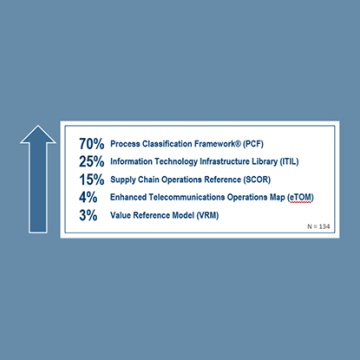
 Last month I talked about how process frameworks can work like magic when implemented correctly. But, what I didn’t mention was how difficult it can be to pick which framework to use. With both cross-industry and industry-specific frameworks readily available, and several function-specific frameworks such as SCOR and ITIL, the choice of which framework to use can be perplexing.

Remembering Apollo: Why KM Is Mission-Critical for NASA
Fifty years ago this week, Apollo 11 landed the first humans on the Moon. This remarkable achievement dominated newspaper headlines and was watched live by 20 percent of the world’s population. It positioned the United States as the winner of the space race and turned the spaceflight’s commander and pilot, Neil Armstrong and Buzz Aldrin, into household names.
Process Improvements Driving Benefits for School Districts
APQC asked educators about things educational organizations overlook when trying to improve processes, struggles that made process improvement vital to their district, and the biggest benefits of improved processes . These experts will be speaking at APQC’s Process & Performance Management Conference October 3-4 in the Aligning Improvement to District Goals breakout session track.
How BASF Finds Talent in a Tight Labor Market
Finding qualified talent is one of the biggest challenges for employers today. Our research shows that employers are in search of innovative ways to fill open positions. Chemical company BASF has found, and is having success with, a number of talent acquisition innovations. Recently, I interviewed BASF’s Heidi Gerhard, director of leadership, organizationl capability and culture, about how the organization has transformed its approach to hiring in ways that allow it to secure the best talent in a tight labor market.

Driving Process Value End-to-End Improves Measurement, Ownership and Governance
The State of Emerging Tools and Technologies in Finance
Digital transformation is top of mind these days for not just finance, but across the enterprise. In fact, three-quarters of those responding to a recent APQC process and priorities survey said that they were undergoing a digital transformation in 2019, with the top justifications being to increase organizational efficiency, improve the customer experience, and enable better data management.
Tips to Test Drive KM Digital Transformation
 Everywhere you look, companies are experimenting with digital transformation. According to APQC’s Measures of Digital Transformation research, around half are in the early stages of digital implementation: 17 percent are running pilots, 4 percent are evaluating recently completed pilots, and 28 percent are deploying their first wave of digital projects.