The APQC Blog
All Posts
Social links
The Hardest Part of Knowledge Flow
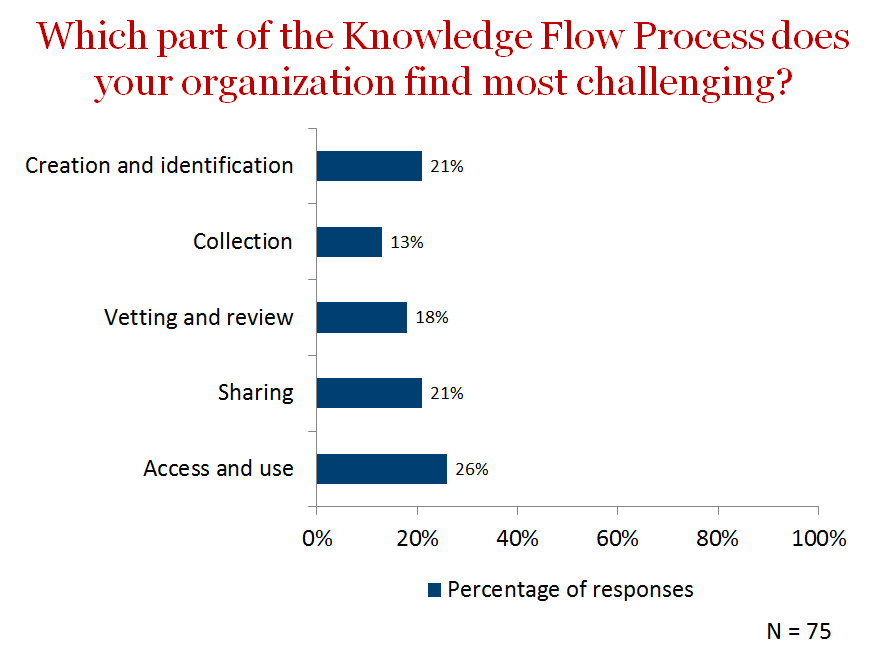
Last week, Cindy Hubert and I presented a Webinar on making knowledge flow through organizations. We talked about APQC’s seven-step Knowledge Flow Process and how to deal with glitches and bottlenecks as you move through the cycle. As part of the call, we asked you which part of the knowledge flow process your organization finds most challenging. Here are the results:
The Current State of Project Management Offices
Creating an effective, productive project management office (PMO) is a key concern for many organizations. The Project Management Institute (PMI) released a 2012 pulse of project management report that examines the current trends of more than 1,000 project management professionals. Some of the survey findings suggest that there are five key areas where PMOs are focusing their attention:
Human Capital Management Articles—Favorite Reads from APQC
It’s December and workers across the globe are engaging in a similar yearly tradition—reflecting on the lessons of the past and aspiring for an improved future. For the many workers considering issues related to people management, we have compiled a list of some of our favorite APQC articles on human capital challenges and best practices.
Happy reading and best wishes for continued improvement in 2013.
Reshoring in the News Again
Over the weekend NPR ran a story on reshoring: not necessarily a new topic, but one that has gained new publicity by the recent announcement from Apple that it will move production of a line of its Macs from China to the United States.
Financial Reporting Increasingly Complex
As 2012 begins to come to a close and finance departments are consumed with the year-end close-to-disclose process, it seems fitting to reflect back on how this “last mile” of finance has transformed over the past few years. The close-to-disclose process involves all activities needed to close an organization’s books, perform all necessary inter-company accounting and reconciliation steps, finalize consolidated financial statements and release earnings and publish official statements with regulators such as the U.S. Securities and Exchange Commission (SEC).
3 Models to Transfer Best Practices in Your Organization
While not as “sexy” as social media or mobile KM, a solid process to identify and transfer best practices is one of the best knowledge-related investments an organization can make. By learning what works in other business units and locations, employees are exposed to theory, evidence, and expertise all in one. It can be challenging to achieve widespread adoption of best practices, but organizations that get it right see financial impact ranging from $7 million to $200 million annually.
Should Compensation Be Linked to Performance Measures?
When it comes to performance measurement systems, staff buy-in, support, and participation are key. Many times, organizations assume that because management and leadership support measurement, employees will be onboard as well. Yet, employees find measurement threatening—many worry that it will lead to punitive action. One of the more controversial ways that organizations have attempted to gain buy-in is through connecting performance targets to compensation.
Why Former Consultants Make Deliberate Buyers
Selling consulting services to a former consultant requires a different mindset than when pitching a project to someone who has never sat on your side of the negotiating table. APQC’s analysis of 72 organizations’ consulting procurement practices found some key distinctions you should be aware of the next time you find yourself selling to a former peer.
3 Talent Development Best Practices
Talent development lessons for all can be found in best-in-class finance functions. This was my big take-away after co-presenting a webinar for Business Finance Magazine on developing finance professionals.
Food Supply Traceability
Serious food recalls, such as the recall of salmonella-tainted cantaloupes in the United States last summer, often make the news and are alarming for consumers. Yet not every food recall receives news coverage, and this was the inspiration for the U.S. Food Safety Modernization Act (FSMA) that was signed into law in early 2011. This law requires organizations in food supply chains to be able to trace food items to their origins.