APQC spoke to Andrew Spanyi about digital transformation, why it’s so challenging and how organizations can do it well. Andrew Spanyi was a keynote speaker at APQC’s 2017 Process Conference. He coaches process owners and provides guidance on centers of excellence (CoE). Andrew’s contribution to process management is recognized internationally. Andrew is the author of ‘More for Less: The Power of Process Management’ and Business Process Management is a Team Sport: Play It to Win.
Q: A lot of companies and leaders talk about digital transformation but as you talk about in your forthcoming book, people have a lot of misconceptions about digital transformation. Can you explain what digital transformation is and is not?
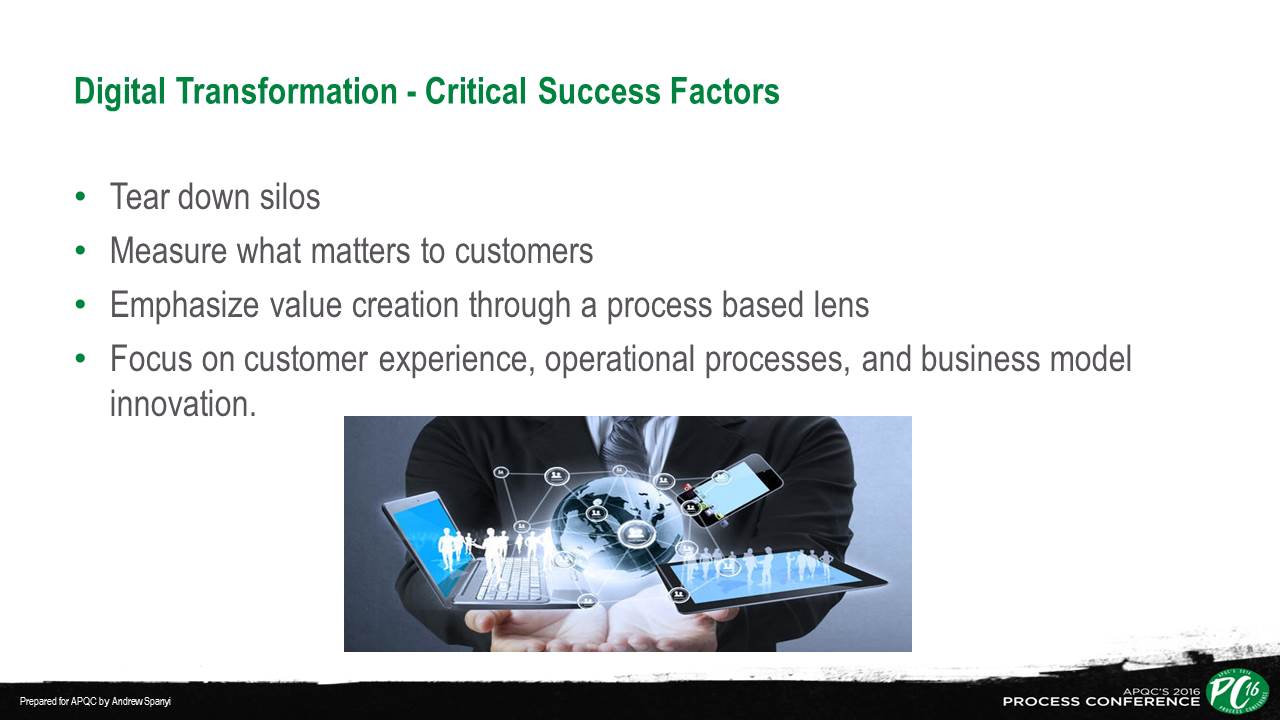 Yes – it’s true that there are a lot of misconceptions around digital transformation. Digital transformation occurs when businesses are focused on integrating digital technologies, such as social, mobile, analytics and cloud, to transform how their businesses create value for customers. If there’s not a clear emphasis on customer value creation it’s not transformation. If the effort is simply focused on applying IT tools to the same business model – it’s not transformation.
Q: What’s the number one challenge businesses face when conducting a digital transformation?
The number one challenge facing businesses in digital transformation is that our skills and organizations are lagging in technology. They don’t take the time or invest the energy needed to see the business from the customers’ point of view. This is not just about building customer journey models – but also developing a shared understanding of the value creating business processes and engaging in candid conversations on the type of cross functional cooperation that’s needed – along with the application of social, mobile, analytics and cloud technologies, and even robotics and cognitive computing.
Q: What tactics or approaches should businesses do to make sure their digital transformation keeps the customer in mind?
The best way to do that is through measuring what matters to customers – which typically involves metrics around the timeliness and quality of the products and services provided. Most organizations tend to focus on financial measure of performance and place insufficient emphasis on critical to customer metrics such as perfect order performance, variance to promise, and responsiveness. In addition to thinking about just customer touching departments actions – it’s useful to model the customer journey and discuss the level of collaboration needed to create value for customers. For example, customer service reps cannot do their jobs well without input and advice from marketing on new promotions and finance on terms and conditions.
Q: In your experience what is the one action or mistake that organizations commit that ultimately leads to a failed digital transformation?
In my view, the single most important action to avoid is to lead with technology. Digital transformation – like most strategic agenda items – needs to be led from the top down to assure strategic alignment. When organizations lead with an undue focus on tools and technology it is extremely difficult to achieve the needed level of alignment and there’s a tendency to implement digital technologies in a departmental context instead of viewing the business as a set of value streams.
Q: On the flip side, what is the one action that organizations can do to ensure a success in digital transformation?
Well, there are several – but I would probable say that the single most important thing is to take the time and energy to view the business from the customer’s point of view in a value stream or process-based context. This requires a shared understanding of the processes that create value for customers and candid conversation on the type of cross-functional collaboration that’s needed along with the application of social, mobile, analytics and cloud technologies, and cognitive computing.
Learn more about the knowledge shared at the conference by reviewing the following APQC collections:
You can learn more and contact Andrew at his website Spanyi.com.