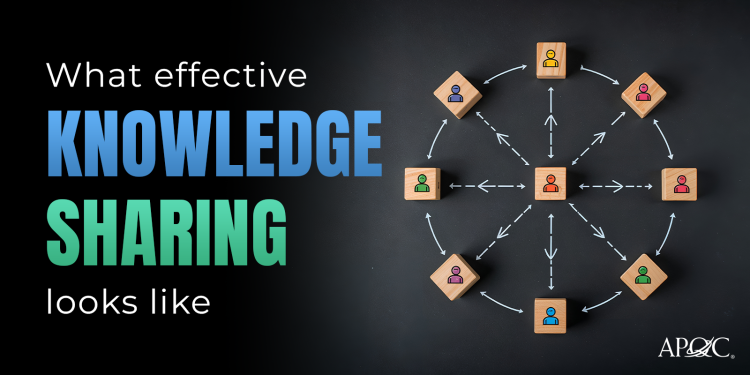
Knowledge Sharing is the practice of moving useful know-how from people, teams, and systems to the people who need it. It includes more than publishing documents. In APQC's Knowledge Flow Process, sharing is the fifth step, and it covers both disseminating collected and reviewed knowledge and direct person-to-person exchanges. That means a lesson learned, a community discussion, an expert referral, or a reusable template can all be part of knowledge sharing when they help someone do better work.
Why knowledge sharing matters
Knowledge sharing helps organizations learn faster, repeat proven practices, avoid costly errors, and reduce rework. It also creates a more collaborative culture because employees are not forced to solve every problem alone. The best programs focus on critical knowledge: the insights, methods, and experiences that have the greatest impact on performance. Technology can help, but it is not the starting point. People need clear reasons to share, trusted places to contribute, and practical guidance on where different kinds of knowledge belong.
What effective knowledge sharing looks like
Effective knowledge sharing is designed around daily work. Communities of practice, knowledge portals, content repositories, social platforms, expert directories, lessons learned databases, and knowledge maps can all help. The most useful mix depends on the organization, its culture, and how employees already collaborate.
Strong programs usually include:
- collaboration structures that connect people across teams and regions;
- tools that fit existing processes instead of forcing new habits;
- guidance on when to use each channel or repository;
- communication that explains "what's in it for me";
- links between sharing, learning, recognition, and career growth.
How to build a knowledge-sharing mindset
A knowledge-sharing mindset does not appear automatically. Common barriers to knowledge sharing include cultures that do not value sharing, employees who feel too new to contribute, knowledge hoarding, weak relationships, and low trust in resources or colleagues. Organizations can address these obstacles by asking leaders to model sharing, recognizing contributors, building knowledge management into onboarding, making sharing part of daily work, and creating expertise-location tools that help employees find the right people.
Trust is especially important. Employees are more likely to reuse knowledge when content is reviewed, current, and clearly labeled. They are also more willing to ask questions when they know who owns the topic and whether a resource is expert-validated or peer-generated.
Ultimately, knowledge sharing turns individual experience into collective advantage. When useful knowledge flows to the right people at the right time, organizations make better decisions, strengthen learning, and create value beyond one team, project, or moment.