This morning I got to hear Sandy Kemsley speak at APQC’s 2013 Process Conference. While she’s a business process management analyst and consultant, her keynote, Changing Incentives for Knowledge Workers in Collaborative Enterprise Processes, resonated for me—and I think would for other KMers. Speaking to a room full of process management people, she emphasized the importance of building social and collaborative elements into business processes (yea!). And then she talked about all the cultural factors that affect whether or not employees share knowledge and collaborate (double yea!).
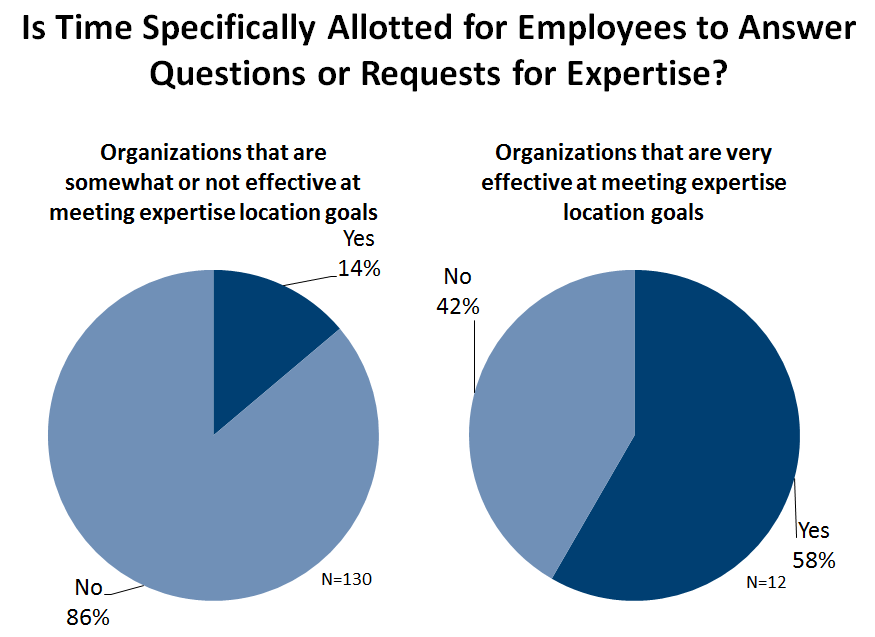
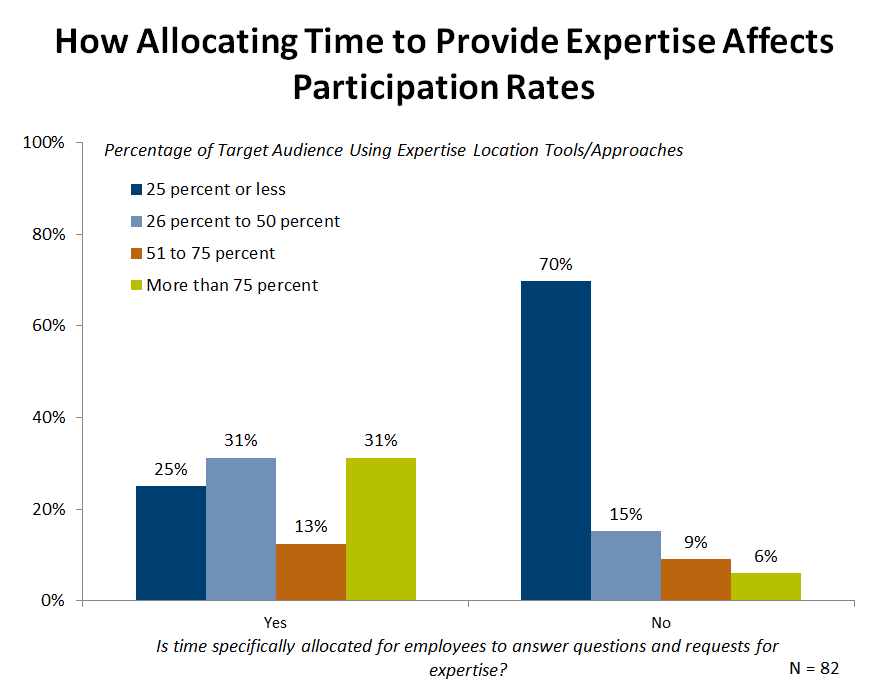
One of the things Kemsley mentioned was that organizations need to give people the time and space to collaborate. If employees aren’t measured on anything other than how quickly and efficiently they can complete tasks and no time is set aside to help one another or answer questions, you’re not likely to get a lot of collaboration. Her point is perfectly illustrated by APQC's Trends in Expertise Location survey, which focused on how organizations connect people to experts and expertise within the work force. As the charts below show, organizations that are very effective in meeting their expertise location goals are more than four times more likely to specifically allocate time for employees to answer questions and requests for expertise. Organizations that make time for these activities also achieve higher participation rates in expertise-sharing and collaborative approaches.
Kemsley went on to say that organizations need to set clear expectations for how they want employees to collaborate and then reward them for participating effectively. She talked extensively about aligning key performance indicators to collaborative goals. She also referenced gamification as a way to motivate employees and give them credit for their collaborative contributions. APQC completed research on gamification for knowledge management earlier this year, and although this is still an emerging field, we agree that organizations like Accenture, Deloitte, and Wipro are already achieving results in terms of realigning employee incentives. It will be interesting to see if a broader range of industries jump on the gamification bandwagon over the next year or two.
In short, it was a great session, and I highly recommend checking out the slides. You can also read Kemsley's blog at www.column2.com or follow her on Twitter @skemsley. If you want to know more about APQC’s research in this area (and we have a ton!) visit our Knowledge Base. Or if you have specific comments or questions, post them below.