How does your organization’s product development function compare with that of other organizations? In this post I want to talk about data for a few key performance indicators in product development. The data presented here is taken from APQC’s Open Standards Benchmarking in product development.
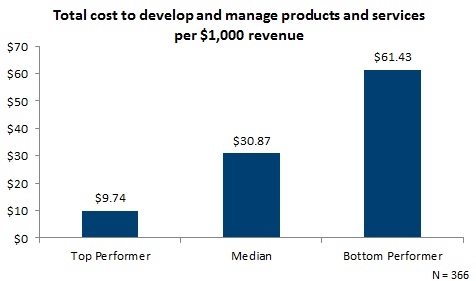
Two important drivers of the cost to develop and manage products and services are the percentage of new product/service development projects launched on time and the percentage launched on budget.
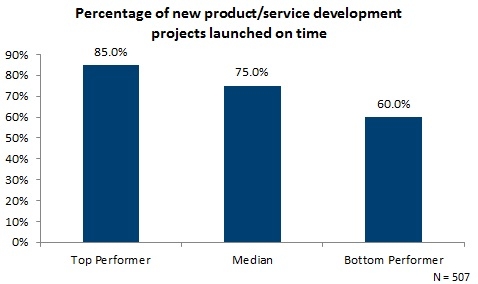
APQC’s data shows, at the median, only 75 percent of new development projects are launched on time. Bottom-performing organizations see only 60 percent of these projects launched on time.
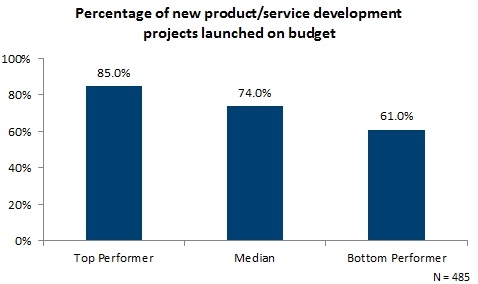
There are similar results with regard to the percentage of new development projects launched on budget. At the median, 74 percent of these projects stay on budget, and for bottom-performing organization this number is only 61 percent.
Improving performance on the amount of projects launched on time and on budget would help bring down the total cost of product development. Not only does the total cost of product development increase with the increased personnel costs caused by projects running past deadlines and unsuspected expenditures caused by projects running over budget, but there can also be unexpected costs when personnel on an overdue project are not available for new projects.
How can organizations improve their on time/on budget performance? APQC’s research indicates that organizations can improve in this area by clearly defining stage-gate requirements. Organizations can also leverage stage-gates to monitor the progress of projects and quickly detect any problems that should be addressed.
Another tactic for improving project performance is to establish a “knowledge sharing” program in product development that allows employees to share best practices and lessons learned from previous projects. This could be as simple as a company intranet site with summaries of problems encountered from previous product development projects and tips and solutions that other employees have found. Having this information readily available can help teams for current projects avoid pitfalls that can extend the life and the cost of a project.
How does your organization's performance compare to APQC’s benchmarks?