It feels like I can’t open a browser these days without encountering a sweeping statement about the future of work. A lot of the headlines are intentionally over the top, from robots coming to take your job to Millennials not wanting to work. But beyond the clickbait, people’s relationship to work is changing. And it isn’t just about Boomers retiring and Millennials moving up the ranks (though that’s one factor). Here are some of the broad trends.
- The physical settings where work happens are diversifying. Two decades ago, the vast majority of knowledge workers were housed in traditional offices divided into closed offices and cubicles. Now, most organizations have more open, flexible environments that incorporate multipurpose, collaborative, and reconfigurable spaces. On top of that, an increasing number of people are able to leverage technology in order to work from anywhere.
- Virtual tools transform how we consume information and work together. From document sharing to enterprise social networking, it goes without saying that technology allows us to work and collaborate in ways our grandparents couldn’t imagine. And as cutting-edge tools like artificial intelligence, virtual reality, and wearable technology enter the mainstream, our working norms and habits will continue to evolve. In addition to changing how we access people and information, these technological shifts have deep repercussions concerning how we establish trust, learn, and build relationships.
- The decoupling of work from a physical location has profound implications for the human experience. Obviously, there are huge benefits to technology that allows us to plug into our jobs from anywhere with a wifi connection, and today’s workers enjoy more mobility and flexibility than ever before. But there’s a catch. If there are no boundaries limiting when and where we can work—and if work messages flash across our phones 24/7—then it’s easy to work too much and feel like work is impinging on the rest of our lives. The data backs this up: According to Gallup, 50% of American full-time employees work more than 40 hours a week, with the average workweek hovering around 47 hours.
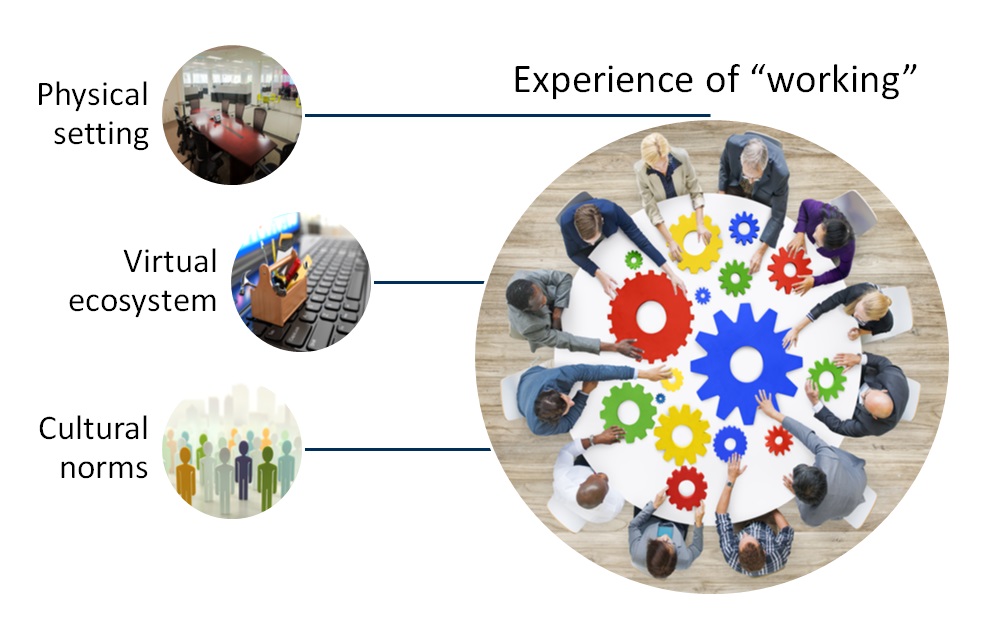
How are these big-picture trends impacting the different generations in the workforce? What do people actually want out of work, and how can organizations start preparing for the future? I certainly don’t have all the answers, but as a researcher, I know where to start looking.
This month, APQC launched a new study on the future of knowledge work. To understand what’s coming and where organizations should invest, we need to know about your current work experience, what you need and expect going forward, and what changes would make you most productive and happy.