In 2012, Williams launched a large-scale initiative to consolidate 12,000 documents from about 20 different organizations into a standard information architecture and process. APQC talked to Elisa Munoz, knowledge management consultant at Williams, about how Williams got leadership buy-in for content clean up, rationalization, and categorization and applied design thinking to create a solution that can be sustained in SharePoint.
Elisa Munoz and Leslie Nessim of Williams will be presenting “Design Thinking Applied to Findability for Operations” at APQC’s 2016 KM Conference April 28-29.
How did you get leadership to support the clean up?
The Executive Officers Team had established a priority for the enterprise, which was to develop and implement a unique set of standards, procedures, and an integrated management system. When we presented the Knowledge Services recommendation for the Williams Integrated Management System (WIMS), they were very pleased to see we had a plan for how to organize the content; differentiate it from other content; categorize, eliminate duplicates, and relocate content; and keep it reliable.
In addition, showing them that we were thinking of all users and their needs, as well as how we were going to scale to an enterprise-wide implementation using the existing SharePoint environment while appropriately communicating and training was a big plus, but what I believe made a big difference when trying to get leadership support was our ability to show prototypes and visuals.Without them we might have been trying to sell an idea, and nobody ever sells ideas. You can always sell a product if you prototype and envision.
In our case, part of getting leadership support was getting the approval of the content analysis and migration tool for future use. For that, we submitted a separate business case that demonstrated the engagement process, the tool analysis results, the immediate cost savings, and the potential annual savings. We started the WIMS effort without this tool, but now that we have delivered WIMS and we have the tool, we can address other larger content scopes while we continue to apply design thinking and process.
Where do you start when undertaking such a large challenge?
You start by understanding the target content, how flawed it is, its location, and how it should be organized for use. During this process you identify a content map and document types. Analyzing the content requires time and patience and subject matter experts, and we came up with a process that we now use for all content rationalization projects.
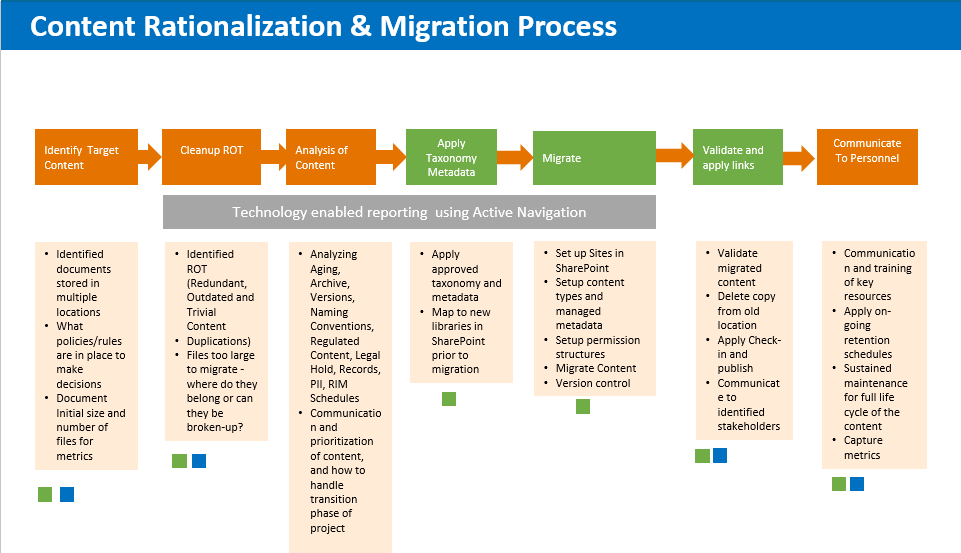
Figure 1. The content rationalization process is based on analysis and tagging and requires subject matter expertise.
You also start by identifying who needs this content and how it needs to be accessed, what technology might be available, and what kind of support you have available from other organizations like IM. But also—and perhaps most importantly—you need a clear understanding of everyone involved in the effort as well as their role. Early on, you need to break the organizational silos by establishing a product plan together with the product manager role and responsibilities, which might be different from the already established KM or knowledge service roles.
Why is that? Well, because you are really engaging in a product and user experience design process, not just any SharePoint project. In the end, the product that you are designing (with more or less help from IM) and delivering to an operating or functional area business owner needs to be sustained and improved over time. It needs to be managed from the design process perspective.
The product plan is a tool to establish the product vision and governance, as well as the user needs; eventually, it includes the visual design standards, the taxonomy and information design, the content types design, the rules for content personalization, the search design, the wireframes, and the product roadmap. The truth is that the content scope as well as the user experience will need to be delivered in phases to be really feasible, and someone needs to own that design process and keep it all together.
If you reference the user experience framework that we used, you will also realize that you need the right resources to deliver on this kind of complexity. Regardless of the resources under your management and the pieces in the design framework, all need to be executed professionally.
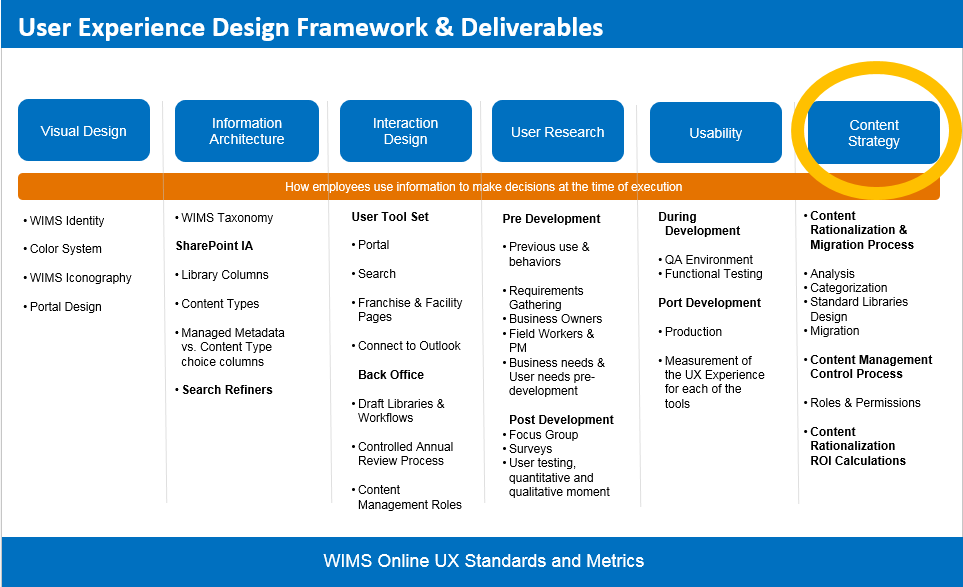
Figure 2. The user experience framework helps identify the complexity and adequate resources
I emphasize the product management role because, in our case, the content and process owners had clearly identified responsibilities, but the product manager role was not clear. The biggest challenge from my perspective was to establish an adequate user experience design process without having clear leadership.
In a typical corporation, initiatives like this one are identified as “enterprise-wide;” however, each process owner (content owner) is responsible for contributing specific content and is not necessarily responsible or qualified to design a user experience that makes sense for employees. In addition, IM is usually organized by process system and support area and may not be focused on the overall operations user experience. Knowledge managers are in a position where they can become user experience managers, but for that, you also need to bring in different tool sets, like a user experience framework and user experience designers.
The best allies in the design process were definitely the users because their issues going from system to system in search of content and data justified the redesign of the existing legacy systems.
Why was the design and establishment of a controlled process and single source of truth so important to the success of your project?
The main reasons for the project were to create process consistency and reduce risk. This project became a priority after two big companies had merged into one, and both companies had different standards, procedures, and ways of operating. The merged content project made sure the best from all procedures was incorporated into the new. Designing a controlled process for the reference content became critical because having different, duplicate standards and procedures residing in different repositories could lead employees to ask the question: Which one should I use?
Creating a single source of truth for employees to access documents and presenting these documents based on their applicability to the specific franchise and facility solved the problem of reliability. The controlled process and single source of truth enabled employees to create convenience copies when they download, but the sync capability that is offered makes it very easy for them to update the copy they have with them.
How do you organize content to optimize the user experience and ensure people can easily find what they need?
The user experience is better when content is easy to find. It should be structured for the users, not the administrators. In this regard, figuring out what is logical for users, how they interact and how they look for information is key. In our case, we organized focus groups and interviews where we presented prototypes. Through this process, we came to determine that users needed an interface that personalized the content to their specific facility, within a specific franchise. We also determined that the content needed to be accessed both online and offline. This is why we decided early in the design process that the one-stop shop portal was not going to be enough.
We also realized that the content in context was of specific types, and making those categories standard across the enterprise became a challenge because users had different names for documents. But it was possible in the end. The taxonomy work that we did to get to standard naming for all franchises, their facilities, facility types, content levels, and document types was quite intensive and, without it, we could have not created the user experience.
In addition to the taxonomy, we also created a visual language for the content and document types: a color and shape system that helps employees recognize whether a document is a mandatory company-wide requirement, a site-specific procedure, a best practice, or an engineering and construction standard. The shape system was considered for color blind users, and it was used in the documents, the website, and the custom search experience.
The fact that search and offline access were needed influenced how the solution was technically resolved in SharePoint, and determined how content had to be physically placed on the specially designed content types. Also, within the content type library, the documents had to be tagged with the taxonomy metadata and physically be placed into folders.
In conclusion, we applied the design principle that “form follows function” to organize the content. In other words, how we organized the content and applied the technology (form) met the needs of those using the content (function).
How do you ensure that the content strategy and system you’re putting in place is maintained over the long term?
We established a process and roles for keeping the controlled libraries long-term. The draft documentation where the collaboration occurs is separate from the controlled libraries. The controlled libraries are managed by a knowledge services lead or by an individual working at each of the franchises. Only these gatekeepers can add approved content to the libraries.
In regards to how the system operates, its technical dependencies and roadmap are all documented in the product plan, which is transferable within the organization at a given point in time.