Sales budget outsourcing cost as a percentage of revenue

This measure calculates the outsourcing cost of sales budget as a percentage of revenue. Outsourced cost refers to the total cost of outsourcing a specific process to a third party, except one-time charges for any type of restructuring or reorganization. Outsourced costs should also include costs for intracompany outsourcing (i.e., reliance on a shared services center or other business entity). The budget for sales is the amount predicted to be spent operating its sales function. Among other things, this includes IT costs required to operate, travel costs incurred, personnel cost of sales people (excluding promotional fees paid to them, but including other benefits), and allocated overhead costs. The sales budget EXCLUDES items traditional marketing expenses such as costs paid to retailers, logistics costs for delivery of finished products to customers, costs for promotional employees, etc. The sales budget also excludes revenue prediction for the business entity. This Cost Effectiveness measure is intended to help companies understand this cost expenditure related to the process group "Develop sales strategy".

Benchmark Data

Lock

Sorry! Not all users have access to all our resources. If you are not logged into your APQC account, please log in and try accessing again

Not a member yet? Members have access to all of our resources.

Learn about Membership Arrow with stem

Measure Category:
Cost Effectiveness
Measure ID:
109298
Total Sample Size:
350 All Companies
Performers:
25th Median 75th
- 0.19% -
Key Performance Indicator:
No

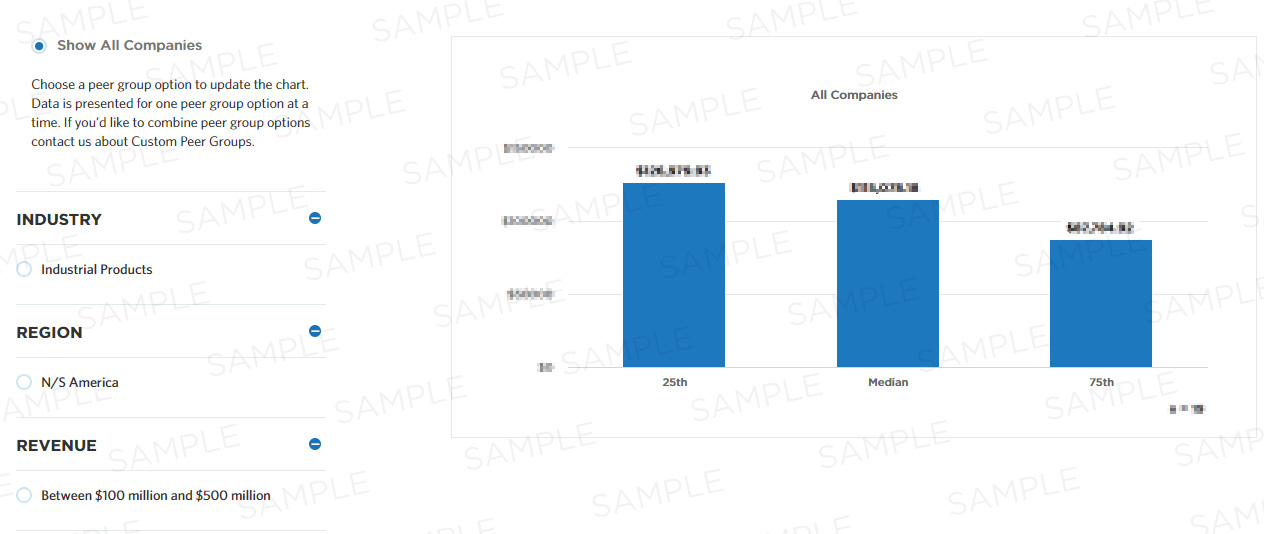
Sample image showing interactive filters for more detailed measure peer group data and an interactive graph.

Compute this Measure

Units for this measure are percent.

Back to Top

(Budget for sales*(Percentage of sales budget allocated to outsourcing/100) / Total business entity revenue)*100

Key Terms

There are no key terms associated with this measure.
Back to Top

Measure Scope

Back to Top

Cross Industry (8.0)

  • 3.4.1 - Develop sales forecast (10129) - Developing a sales forecast for the organization's portfolio of offerings, bearing in mind the effect of promotional events, and fine-tuning these in the context of the new forecast. Estimate the future demand for the organization's products/services by analyzing historical information and any promotional activity.
    • 3.4.1.1 - Gather current and historic order information (10134) - Gathering all information about sales orders into an index. Create a directory of all sales orders, whether open or those which have been fulfilled. Track what product/service was ordered, the quantity ordered, who ordered it, the delivery date, the shipping method, the unit price and line total, payment terms, and any discount applied.
    • 3.4.1.2 - Analyze sales trends and patterns (10135) - Analyzing sales order data to identify patterns in order to capitalize on emerging trends in the industry or the economy. Closely examine the directory of sales orders. Discern any patterns from this index, which is representative of the demand for the organization's offerings. Identify trends among the various segments of the organization's customer base to create forecasts. Glean patterns from this analysis, including the triangulation of segments that are showing the most growth in demand or those that represent the highest decline revenue, industry-wide trends such as decline/boost in overall demand, and any unusual trends that lie outside of the organization's expectations.
    • 3.4.1.3 - Generate sales forecast (10136) - Calculating the future demand for the organization's products/services. Use the trends and patterns identified in the sales data to estimate future demand. Use forecast to prepare for future customer demand and to recalibrate the strategic course of functions and business units.
    • 3.4.1.4 - Analyze historical and planned promotions and events (10137) - Reviewing promotional activities' effect on the sales orders. Analyze all promotional events and campaigns that the organization has already employed or is planning to deploy.
  • 3.4.2 - Develop sales partner/alliance relationships (10130) - Cultivating an alliance of partners by identifying, analyzing, negotiating, and managing partnerships with other economic agents.
    • 3.4.2.1 - Identify alliance opportunities (10138) - Identifying collaboration opportunities for selling, marketing, and distributing the organization's products/services. Determine any scope for partnering with other economic agents, with synergies for the marketing, sales, and/or distribution of the organization's products/services. Identify alliance opportunities that target customer segments who would be interested.
    • 3.4.2.2 - Design alliance programs and methods for selecting and managing relationships (10139) - Creating the frameworks needed to select alliance partners, and maintaining relationships with them. Create a framework for structured programs that can receive and support multiple alliances. Clearly outline the responsibilities and benefits of the alliance partners. Create frameworks for selecting the right alliance partners, and maintain a relationship with them. Create or repurpose teams of relationship managers and outline a methodology for selecting alliance partners.
    • 3.4.2.3 - Select alliances (10140) - Choosing alliance partners using the selected programs and methodology. Select the most feasible and profitable alliance partners, based on Design alliance programs and methods for selecting and managing relationships [10139] and through a careful scrutiny of the potential alliance.
    • 3.4.2.4 - Develop customer trade strategy and customer objectives/targets (11465) - Implementing category management strategies for customers through the use of consumer insights and understanding of customer specifics. Develop consumer and channel insights. Establish long term strategies, objectives and targets across the brand.
    • 3.4.2.5 - Define trade programs and funding options (11521) - Establishing business-to-business marketing campaigns and financial incentives for wholesalers, dealers, distributors and other intermediaries that the company uses to distribute its products or services.
    • 3.4.2.6 - Conduct planning activities for major trade customers (11466) - Arranging meetings with trade partners to coordinate logistics, manage critical resources, resolve bottlenecks, and schedule urgent or time-sensitive matters.
    • 3.4.2.7 - Develop partner and alliance management strategies (10141) - Designing strategies for effectively managing, identifying, and countering any possible issues from the alliance partnerships formed. Create a strategic road map for managing the partnerships forged through Design alliance programs and methods for selecting and managing relationships [10139]. Determine where the alliance partnerships are headed, possible problems or pushback from the partners, how these issues might be countered, how these alliance partnerships would evolve in the future, any other business cases where these partnerships might be deployed, etc.
    • 3.4.2.8 - Establish partner and alliance management goals (10142) - Setting targets for organizational achievement. This includes what the organization aims to achieve from and how it wishes to manage both the individual partners and the alliance as a whole. Set immediate through long-term goals including revenue targets, market penetration, footfall numbers, and geographical coverage.
    • 3.4.2.9 - Establish partner and alliance agreements (18629) - Setting up strategic alliances with key trade partners and ratifying partnership agreements.
    • 3.4.2.10 - Develop promotional and category management calendars (trade marketing calendars) (11522) - Combining scheduled promotional, category management and trade marketing events into unified timetables. Update the calendars. Register new events.
    • 3.4.2.11 - Create strategic and tactical sales plans by customer (11523) - Establishing long term customer sales plans to assess current sales and to determine future sales objectives, strategies for achieving the goals, and available resources.
    • 3.4.2.12 - Communicate planning information to customer teams (11468) - Sending invitations and distributing information about upcoming events to customer teams and other involved entities.
  • 3.4.3 - Establish overall sales budgets (10131) - Setting up a financial plan for the sales function. Calculate the estimated sales revenue and costs, which helps in calculating the overall net profit. Create a sound plan for resource outlay by comparing the forecast with historical data.
    • 3.4.3.1 - Calculate product market share (17682) - Determining the percentage of total sales volume in the market for a particular product.
    • 3.4.3.2 - Calculate product revenue (10143) - Estimating revenue from the sale of products/services. Approximate the anticipated sale of products/services and multiply it by the selling price of the respective offering. (This represents the total amount of money that the organization receives from the sale of its portfolio of offerings.)
    • 3.4.3.3 - Determine variable costs (10144) - Calculating the variable costs of production. Approximate those costs that depend on the volume of products/services produced by the organization.
    • 3.4.3.4 - Determine overhead and fixed costs (10145) - Calculating the overhead costs associated with selling the organization's products/services. Determine fixed costs that are not directly related to the volume of products/services processed or the sale of these offerings (e.g., expense over machinery and equipment).
    • 3.4.3.5 - Calculate net profit (10146) - Calculating the net income. Calculate the organization's profitability by accounting for Determine overhead and fixed costs [10145] and Determine variable costs [10144].
    • 3.4.3.6 - Create budget (10147) - Creating a plan in measurable terms for the financial outlay that best captures resource allocation for the sales forecast. Consider the outlay of capital, HR, raw materials, and provisions needed to reach sales targets.
  • 3.4.4 - Establish sales goals and measures (10132) - Establishing specific quantitative and qualitative measures of realizing sales targets. Create sales targets by analyzing historical sales data and comparing the forecasts to results, in light of customer and market intelligence. Examine the performance of sales personnel in light of market opportunities. Based on this review, establish sales targets along with metrics to quantify these goals, corresponding with the overall business strategy.
  • 3.4.5 - Establish customer management measures (10133) - Identifying the appropriate measures that can represent key attributes of the customer management function. Select measures to track customer activity, feedback, satisfaction, organizational responsiveness to customer needs, and general data on how the organization is managing customer accounts, leads, and contacts. Build on customer and market intelligence to identify metrics gauging aspects related to customer management. Select measures based on the nature of the business, the type and size of customer base, strategic goals, and the model used to structure sales and customer relationships.