Personnel cost to perform the process group "perform general accounting and reporting" (excluding fixed assets) per process FTE

This measure calculates personnel (compensation and benefits) cost to perform the process group "perform general accounting and reporting" (excluding fixed assets) per process full-time equivalent employee (FTE). Personnel cost refers to employee personnel compensation (salaries and wages, bonuses, overtime and benefits) and fringe benefits (e.g. contributions made towards agovernment retirement fund for employees, workers compensation, insurance plans, savings plans, pension funds/retirement plans, stock purchase plans), and special allowances such as relocation expenses and car allowances. The process "manage (financial) policies and procedures" includes [Creating procedures to perform general accounting and reporting. Follow the rules and regulations made for a particular process in the business. Publish accounting policies. ]. The process "perform general accounting" includes [Applying basic principles, concepts, and accounting practices in recording and preparing final accounts, and using accounting information in management.]. process "perform financial reporting" This Cost Effectiveness measure is intended to help companies understand this cost expenditure related to the process group "Perform general accounting and reporting".

Benchmark Data

Lock

Sorry! Not all users have access to all our resources. If you are not logged into your APQC account, please log in and try accessing again

Not a member yet? Members have access to all of our resources.

Learn about Membership Arrow with stem

Measure Category:
Cost Effectiveness
Measure ID:
108830
Total Sample Size:
2,783 All Companies
Performers:
25th Median 75th
- $51,174 -
Key Performance Indicator:
No

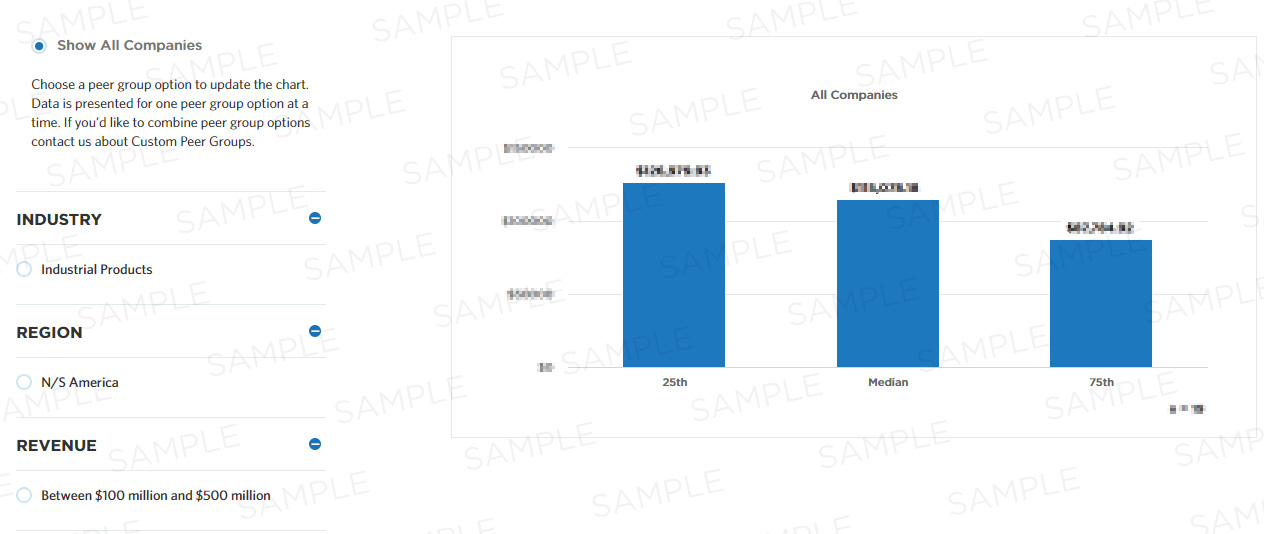
Sample image showing interactive filters for more detailed measure peer group data and an interactive graph.

Compute this Measure

Units for this measure are dollars.

Back to Top

(Personnel cost to perform the process "manage policies and procedures" + Personnel cost to perform the process "perform general accounting" + Personnel cost to perform the process "perform financial reporting") / (Number of FTEs who perform the process "manage policies and procedures" + Number of FTEs who perform the process "perform general accounting" + Number of FTEs who perform the process "perform financial reporting")

Key Terms

There are no key terms associated with this measure.
Back to Top

Measure Scope

Back to Top

Cross Industry (8.0)

  • 9.3.1 - Manage financial policies and procedures (10747) - Creating procedures to perform general accounting and reporting. Follow the rules and regulations made for a particular process in the business. Publish accounting policies.
    • 9.3.1.1 - Negotiate service-level agreements (10815) - Agreeing upon terms and conditions. Negotiate an agreement between two or more parties, the customer and service providers. Specify scope, quality, and responsibilities.
    • 9.3.1.2 - Establish accounting policies (10816) - Establishing policies and procedures to prepare financial statements, including methods, measurement systems, and procedures for providing disclosures.
    • 9.3.1.3 - Publish accounting policies (20604) - Creating a written copy of agreed-upon procedures for preparing financial statements, and making them available to the public.
    • 9.3.1.4 - Set and enforce approval limits (10817) - Implementing parameters for accounting. Apply set conditions for any approval process.
    • 9.3.1.5 - Establish common financial systems (10818) - Establishing processes and procedures to exercise financial control and accountability. Record, verify, and report transactions that affect revenues, expenditures, assets, and liabilities.
  • 9.3.2 - Perform general accounting (10748) - Applying basic principles, concepts, and accounting practices in recording and preparing final accounts, and using accounting information in management.
    • 9.3.2.1 - Maintain chart of accounts (10819) - Preparing trial balance account from general ledgers. List all accounts used in the general ledger. Alter accounts according to business requirements.
    • 9.3.2.2 - Process journal entries (10820) - Making ledger and trial balance accounts from journal entries. This process requires the organization to record every transaction into accounts done by business. It is a base documents for preparing final accounts of company.
    • 9.3.2.3 - Process allocations (10821) - Allocating funds across functions. Apportion funds in line with the budgets created. Formalize allocations in centralized internal records.
    • 9.3.2.4 - Process period end adjustments (10822) - Updating journal entries to adjust the balance of income and expenses at the end of an accounting period.
    • 9.3.2.5 - Post and reconcile intercompany transactions (10823) - Checking accounts separately for a parent and subsidiary company. Manage relationship between a parent company and subsidiaries. Document intercompany transactions in separate financial statements.
    • 9.3.2.6 - Reconcile general ledger accounts (10824) - Reviewing general ledger accounts for a parent and subsidiaries companies. Validate the integrity of account balances on the company's general ledger of accounts. Review and compare general ledger accounts balances with source documents to ensure that balances match.
    • 9.3.2.7 - Perform consolidations and process eliminations (10825) - Aggregating different processes in the business. Eliminate discontinued processes.
    • 9.3.2.8 - Prepare trial balance (10826) - Balancing debit and credit balances of trial balance to preparing final accounts. Calculate the total debits and credits in company's accounts. Correspond the sum of all debits with the sum of all credits. Adjust entries as appropriate.
    • 9.3.2.9 - Prepare and post management adjustments (10827) - Accounting for changes due to country-level policy changes. Record adjustments made by management in the accounts.
  • 9.3.3 - Perform fixed-asset accounting (10749) - Accounting for long-term and fixed assets. Record purchased, fixed assets that are not easily convertible into cash. Account for costs, useful life, resale value, depreciation, and amortization.
    • 9.3.3.1 - Establish fixed-asset policies and procedures (10828) - Creating rules for fixed assets market valuation. Make rules and regulations for fixed assets regarding depreciation, provisions, resale, usage, etc.
    • 9.3.3.2 - Maintain fixed-asset master data files (10829) - Keeping reports up-to-date regarding fixed assets. Create a fixed assets database detailing price, life cycle, depreciation rate, resale value, installation information, usage information, etc.
    • 9.3.3.3 - Process and record fixed-asset additions and retires (10830) - Keeping a summary of sales and purchases of assets. Record any expenses made for new assets purchased and sales of any old assets during the fiscal year.
    • 9.3.3.4 - Process and record fixed-asset adjustments, enhancements, revaluations, and transfers (10831) - Keeping a summary of expenses for installing and modifying assets. Record any expenses made for new assets purchased, any expenses incurred on improvements, the valuation of assets to reach current market price, and any transfer assets from one location to another during the fiscal year.
    • 9.3.3.5 - Process and record fixed-asset maintenance and repair expenses (10832) - Maintaining a record of expenses necessitated for repairs and the preservation of assets. Administer and oversee the maintenance and repair of any fixed assets. Record all related transactions.
    • 9.3.3.6 - Calculate and record depreciation expense (10833) - Carrying out accounting for depreciation over fixed assets. Compute the sums necessitated. Maintain a record of the cost value of fixed assets over their useful life in the book of accounts.
    • 9.3.3.7 - Reconcile fixed-asset ledger (10834) - Balancing the ledger account balance for fixed assets. Correct errors in the books of fixed assets. Provide correct information in relevant accounts.
    • 9.3.3.8 - Track fixed-assets including physical inventory (10835) - Checking and updating the record of all raw materials and fixed assets. Track all fixes asset. Maintain a record of all inventory items.
    • 9.3.3.9 - Provide fixed-asset data to support tax, statutory, and regulatory reporting (10836) - Showing market value and related expenses on fixed assets data for taxation. Provide complete information recorded in the books of fixed assets about purchase price, depreciation, installation charges, resale market value etc. for tax and regulatory purposes.
  • 9.3.4 - Perform financial reporting (10750) - Reporting on the organization's financial status to stakeholders. Include balance sheets, income statements, cash flow statements, and statements of shareholders' equity.
    • 9.3.4.1 - Prepare business unit financial statements (10837) - Making reports of subsidiaries units to show profits generated from them. Prepare financial statements (balance sheets, income statements, cash flow statements and statements of shareholders' equity) for a single unit of a business.
    • 9.3.4.2 - Prepare consolidated financial statements (10838) - Making final accounts for all units of company together. Prepare combined financial statements of a parent company and its subsidiaries (i.e., separate legal entities controlled by a parent company) showing assets, liabilities, equity, income, expenses, and cash flows.
    • 9.3.4.3 - Perform business unit reporting/review management reports (10839) - Making reports for units/subsidiaries to help management in decision making. Prepare financial statements (balance sheets, income statements, cash flow statements, and statements of shareholders' equity) for a single unit of a business. Break down profits and losses by function/unit, clients, products, and region.
    • 9.3.4.4 - Perform consolidated reporting/review of cost management reports (10840) - Making reports for all units to help higher management in decision making. Prepare combined financial statements of a parent company and its all subsidiaries (separate legal entities controlled by a parent company) showing assets, liabilities, equity, income, expenses and cash flows, and also going through periodic reports which shows the actual and estimated costs and their variances.
    • 9.3.4.5 - Prepare statements for board review (10841) - Preparing a draft of financial statements for the board to review before they are sent to the auditor.
    • 9.3.4.6 - Produce quarterly/annual filings and shareholder reports (10842) - Making and presenting financial reports to stakeholders. Create annual and quarterly financial statements for reporting purposes. Prepare shareholder reports with details of the profit-and-loss account, balance sheet, and past year's business activities.
    • 9.3.4.7 - Produce regulatory reports (10843) - Reporting raw or summary data for final accounts following rules and regulations.
    • 9.3.4.8 - Perform legal and management consolidation (14074) - Carrying out activities associated with legal and management consolidation. Legal consolidation can include currency conversion, balance carry forward, and consolidation of journal entries. Management consolidation can include reporting on financials on a reporting cycle basis to gauge the performance of the organization.