Personnel cost to perform healthcare claims processing per internal FTE that performs the process group "adjudicate claims and process reimbursement"
This measure calculates personnel cost to perform healthcare claims processing per internal full-time equivalent employee (FTE) that performs the process group "adjudicate claims and process reimbursement". Personnel cost refers to employee personnel compensation (salaries and wages, bonuses, overtime and benefits) and fringe benefits (e.g. contributions made towards agovernment retirement fund for employees, workers compensation, insurance plans, savings plans, pension funds/retirement plans, stock purchase plans), and special allowances such as relocation expenses and car allowances. The Process group "adjudicate claims and process reimbursement" includes [Developing claim/encounter informatics, adjudicating claims, processing intake of claims, performing claim policy management, communicating claim outcomes, performing benefits management, preparing and processing claims, processing reimbursement and notification, and managing other party liabilities.]. This Cost Effectiveness measure is intended to help companies understand this cost expenditure related to the process group "Adjudicate claims and process reimbursement".
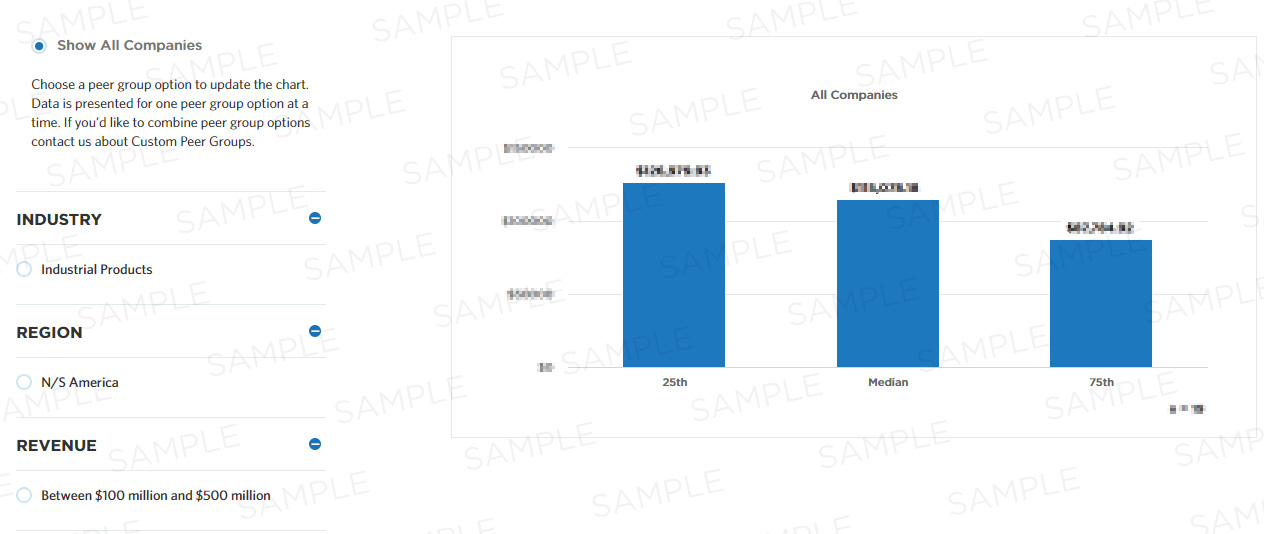
Benchmark Data
| 25th | Median | 75th |
|---|---|---|
| - | $49,565 | - |
Compute this Measure
Units for this measure are dollars.
Personnel cost to perform healthcare claims processing / Number of internal FTEs that perform the process group "adjudicate claims and process reimbursement"
Key Terms
To calculate the number of full-time equivalents employed during the year for each respective process or activity, you must prorate the number of employees and the hours spent performing each process/activity. Assume that a full-time worker represents 40 hours per week. Provide the average number of full-time equivalents employed during the year for each respective process. Include full-time employees, part-time employees, and temporary workers hired during peak demand periods. Allocate only the portion of the employee's time that relates to or supports the activities identified for an applicable process. Prorate management and secretarial time by estimating the level of effort in support of each activity, by process.
For example, a part-time secretary in the finance department for XYZ, Inc. charges all of his time to finance department activities. He works 20 hours per week. The secretary splits his time evenly supporting employees working in the general accounting process and the financial reporting process. Thus, his time should be allocated by process. So, if he works throughout the year and supports these two processes, his time would be split evenly as:
20hrs/40hrs = .5FTE * 50% for general accounting = .25FTE for general accounting
20hrs/40hrs = .5FTE * 50% for financial reporting = .25FTE for financial reporting
Personnel cost is the cost associated with personnel compensation and fringe benefits of employees (i.e., those classified as FTEs which includes both full-time and salaried/hourly employees) contributing to each respective process. Personnel cost should include all of the following costs.
Employee Compensation: Includes salaries and wages, bonuses, overtime and benefits.
Fringe: Includes contributions made towards the employees' government retirement fund, workers compensation, insurance plans, savings plans, pension funds/retirement plans, and stock purchase plans. This should also include special allowances, such as relocation expenses and car allowances.
Cost effectiveness measures are those in which two related variables, one of which is the cost and one of which is the related outcome related to the expenditure are used to determine a particular metric value.