Overhead and other costs to perform the process "process payroll taxes" per employee paid
This measure calculates overhead and other cost per employee paid to perform the process "process payroll taxes". Overhead cost refers to expenses that an organization cannot identify as direct costs of performing a process. These include occupancy, facilities, utilities, and maintenance, etc. Other cost refers to costs other than personnel, equipment, material, systems, or outsourced expenses for the process (e.g., costs for supplies and office equipment, travel, training, and seminars). The Process "process payroll taxes" includes [Deducting and paying taxes from employees' salaries.]. This Cost Effectiveness measure is intended to help companies understand this cost expenditure related to the process "Process payroll taxes".
Benchmark Data
| 25th | Median | 75th |
|---|---|---|
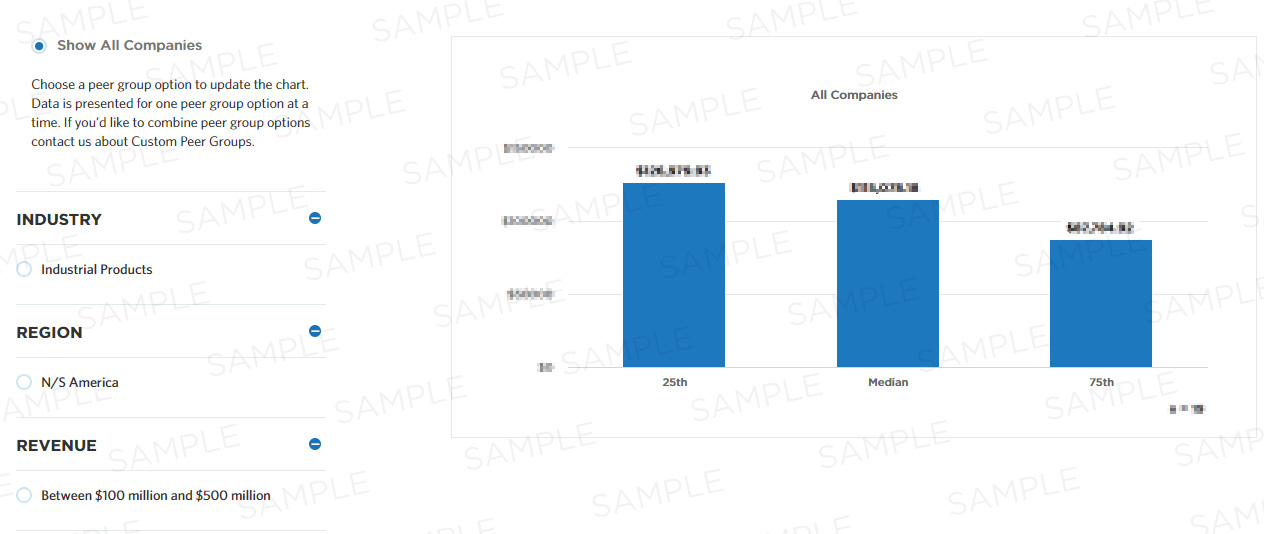
| - | $5.08 | - |
Compute this Measure
Units for this measure are dollars.
(Total cost to perform the process "process payroll taxes" * Percentage of total cost to perform the process "process payroll taxes" allocated to internal costs * Percentage of internal costs of the process "process payroll taxes" allocated to overhead and other costs * .0001)/Total number of employees paid
Key Terms
Other costs are costs associated with the specified process, but not specifically covered in personnel cost, systems cost, overhead cost and outsourced cost in this questionnaire. These other costs include costs for supplies and office equipment, travel, training and seminars. Include the cost of telephones, except for that portion captured in systems cost.
Cost effectiveness measures are those in which two related variables, one of which is the cost and one of which is the related outcome related to the expenditure are used to determine a particular metric value.
Full-time Employee
For the purpose of this survey, a regular full-time employee is hired for an indefinite period of time and is normally scheduled to work forty hours per week. Appointment is continuous, subject to satisfactory performance and availability of funding.
Part-time Employee
For the purpose of this survey, a regular part-time employee is hired for an indefinite period of time and is scheduled to work less than forty hours per week.
Temporary Employee
A temporary employee is employed for a finite period of time, to fulfill a time-limited role, or to fill the role of a permanent employee who is absent from work. The length of time an employee can work for the organization and be considered a temporary employee may be governed by employment legislation.