Total cost to perform the process group "develop products and services" per $1,000 revenue

This measure calculates the total cost to perform the process group "develop product and services," which handles all activities associated with designing, prototyping, evaluating, and market testing product and services. The total cost is the sum of outsourced, overhead, personnel, system, and other costs. This measure is part of a set of Cost Effectiveness measures that help companies understand all cost expenditures related to the process "develop products and services."

Benchmark Data

Lock

Sorry! Not all users have access to all our resources. If you are not logged into your APQC account, please log in and try accessing again

Not a member yet? Members have access to all of our resources.

Learn about Membership Arrow with stem

Measure Category:
Cost Effectiveness
Measure ID:
105505
Total Sample Size:
1,082 All Companies
Performers:
25th Median 75th
- $6.61 -
Key Performance Indicator:
Yes

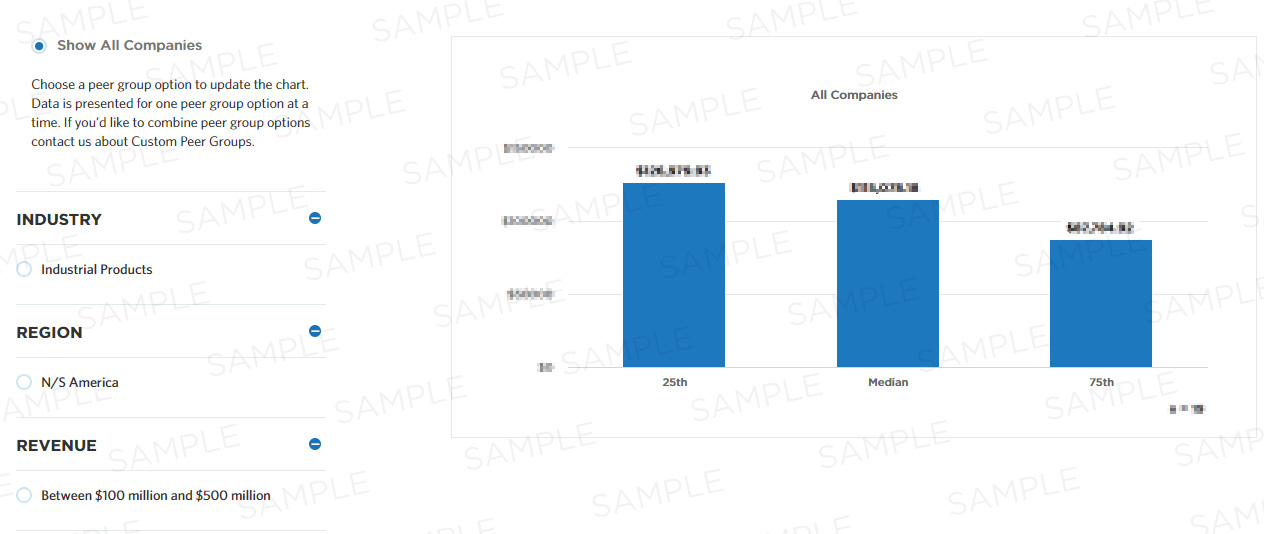
Sample image showing interactive filters for more detailed measure peer group data and an interactive graph.

Compute this Measure

Units for this measure are dollars.

Back to Top

(Total cost to perform the function "develop and manage products and services" * (Percentage of total cost to perform the function "develop and manage products and services" allocated to the process "design and prototype products and services" + Percentage of total cost to perform the function "develop and manage products and services" allocated to the process "test market for new or revised products and services" + Percentage of total cost to perform the function "develop and manage products and services" allocated to the process "prepare for production/service delivery") * 0.01) / (Total business entity revenue * 0.0010)

Key Terms

Back to Top

Total cost for a process, process group, or function consists of the following five components.

Internal/In-house operating cost consists of the first four components (personnel, systems, overhead, and other).

Personnel Cost

Personnel cost is the cost associated with personnel compensation and fringe benefits of employees (i.e., those classified as FTEs which includes both full-time and salaried/hourly employees) contributing to each respective process. Personnel cost should include all of the following costs.

Employee Compensation: Includes salaries and wages, bonuses, overtime and benefits.

Fringe: Includes contributions made towards the employees' government retirement fund, workers compensation, insurance plans, savings plans, pension funds/retirement plans, and stock purchase plans. This should also include special allowances, such as relocation expenses and car allowances.

Systems Cost

Systems costs include all expenses, paid or incurred, in conjunction with:
Computer hardware or computer software acquired by the organization or provided to the organization through service contracts.

Any related costs to process, service and maintain computer hardware or computer software. The costs of providing and maintaining services for each applicable process (e.g., computer system(s) processing (CPU) time, network/system communication charges, maintenance costs for applications and data storage). This includes the costs related to LANs, WANs, etc. This does not include one-time costs for major new systems developments/replacements. Consultant fees should not be included in depreciation of new system implementations. Include only those costs that occur more than six (6) months after implementation, as normal system maintenance costs. Any systems cost (e.g., maintenance) which is outsourced to a third party supplier should be captured in the separate cost category labeled outsourced cost.

Systems cost should include all salaries, overtime, employee benefits, bonuses or fees paid to full-time, part-time or temporary employees or independent contractors who perform services relating to computer hardware, computer software, processing or systems support.

Overhead Costs

For the purpose of this study, provide the total actual overhead costs for the year related to the specified process. These are costs that cannot be identified as a direct cost of providing a product or a service. Include the primary allocated costs such as occupancy, facilities, utilities, maintenance costs, and other major costs allocated to the consuming departments. Exclude systems costs that are allocated, since these will be captured separately as systems cost.

Other Cost

Other costs are costs associated with the specified process, but not specifically covered in personnel cost, systems cost, overhead cost and outsourced cost in this questionnaire. These other costs include costs for supplies and office equipment, travel, training and seminars. Include the cost of telephones, except for that portion captured in systems cost.

External/Outsourced Cost

In determining outsourced cost, include the total cost of outsourcing all aspects of the specified process to a third-party supplier. Exclude one-time charges for any type of restructuring or reorganization. Outsourced costs should also include costs for intracompany outsourcing (i.e., reliance on a shared services center or other business entity).

Total annual revenue is net proceeds generated from the sale of products or services. This should reflect the selling price less any allowances such as quantity, discounts, rebates and returns. If your business entity is a support unit and therefore does not directly generate revenue, then provide the revenue amount for the units you support. For government/non-profit organizations, please use your non-pass-through budget. For insurance companies the total annual revenue is the total amount of direct written premiums, excluding net investment income. Note: Business entity revenue needs to only include inter-company business segment revenue when the transactions between those business segments are intended to reflect an arm's length transfer price and would therefore meet the regulatory requirements for external revenue reporting.

Cost effectiveness measures are those in which two related variables, one of which is the cost and one of which is the related outcome related to the expenditure are used to determine a particular metric value.

The metric value which represents the 50th percentile of a peer group. This could also be communicated as the metric value where half of the peer group sample shows lower performance than the expressed metric value or half of the peer group sample shows higher performance than the expressed metric value.

Measure Scope

Back to Top

Cross Industry (8.0)

  • 2.3.1 - Design and prototype products and services (19993) - Sketching and standardizing product and service based on the market. Analyze the data market competitiveness and innovation attained for the product and service development.
    • 2.3.1.1 - Assign resources to product/service project (10083) - Allocating resources to the design, development, and evaluation of product/service concepts. Allocate funds, personnel, and time for developing the new and/or revised products/services. Begin to design the potential new product/service concepts that have been prioritized and selected for further development.
      • 2.3.1.1.1 - Identify requirements for product/service design/development partners (19994) - Determining essential elements for collaborators involved in blueprint/development of product/service.
    • 2.3.1.2 - Prepare high-level business case and technical assessment (10084) - Preparing a business-level business case and a technical feasibility assessment in order to move the product/service projects forward. Weigh the costs and benefits of designing, developing, and evaluating the shortlisted product/service concepts. Prepare a business case to justify the product/service projects. Conduct a technical appraisal to ensure that the organization has the technical know-how and resources to further develop these concepts.
    • 2.3.1.3 - Develop product/service design specifications (10085) - Creating design specifications. Create specifications for the design of new or revised product/service concepts as a measure to meet during development. Have the senior functional-level solutioning or design staff create a framework of compliance standards for these products/services.
    • 2.3.1.4 - Develop user experience design specifications (16813) - Determining the usability and user experience of products and the business impact it creates.
    • 2.3.1.5 - Provide warranty-related recommendations (16817) - Providing warranty plan and pricing specifications for recommendation.
    • 2.3.1.6 - Document design specifications (10086) - Documenting requirements to meet in the design of new or revised products/services. Specify technical, quality, and costing requirements, as well as ergonomic, safety, and servicing requirements for such products/services. Ensure the information presented can be understood by the personnel executing the design and includes examples, anecdotal references, and illustrations.
    • 2.3.1.7 - Conduct mandatory and elective external reviews (10087) - Conducting any mandatory and elective appraisals of the product/service design specifications in order to ensure compliance with external standards. Carry out external reviews of specifications created for the development of new product/service designs. Conduct mandatory appraisals such as legal and regulatory, as well as any optional assessments that, for instance, pitch the specifications against industrial benchmarks.
    • 2.3.1.8 - Design products/services (19995) - Creating a sketch of the customer focused product/service in Develop and Manage Products and Services [10003].
      • 2.3.1.8.1 - Design for manufacturing (16819) - Carrying out the steps necessary to appropriately manufacture correct parts. This includes designing application, product hardware, mold, casting, mechanical, and electrical aspects of the product.
      • 2.3.1.8.2 - Design for product servicing (16820) - Creating product application service view to allow for product servicing and refurbishing.
      • 2.3.1.8.3 - Design for re-manufacturing (16821) - Replacing core components and republishing.
      • 2.3.1.8.4 - Review product troubleshooting methodology (16822) - Reviewing the design and approach for troubleshooting the product.
      • 2.3.1.8.5 - Design and manage product data, design, and bill of materials (16818) - Designing the BOM-Bill of material, manufacturing BOM and Service BOMA bill of materials list for all the raw materials and components/parts used in the producing end product.
      • 2.3.1.8.6 - Design for product upgrades (16823) - Designing hardware and software upgrade techniques.
    • 2.3.1.9 - Build prototypes/proof of concepts (10088) - Building prototypes for shortlisted product/service concepts. Develop prototypes for those product/service concepts that have been identified for further development. Provide proof-of-concepts, and test any processes involved. Build prototypes in line with the design specifications already outlined. Enlist the solutioning and/or design staff.
    • 2.3.1.10 - Develop and test prototype production and/or service delivery process (10098) - Creating the new manufacturing/delivery processes for the new products/services, and testing them to ensure proper functioning. Create the production/delivery process for the prototypes that have been built for the new products/services. Conduct trial-runs to test these processes and their integration with the organization's other processes.
    • 2.3.1.11 - Eliminate quality and reliability problems (10089) - Eliminating any problems relating to utility of the product/service over the course of its expected lifetime. Tweak the prototype in order to comply with the required quality and reliability standards. Further refine the prototype, so it may be subjected to testing.
    • 2.3.1.12 - Conduct in-house product/service testing and evaluate feasibility (10090) - Carrying out an in-house appraisal of the prototypes in order to validate design and feasibility. Test the product/service prototypes to confirm their compliance with design and usability standards. Corroborate the viability of the design, and validate the feasibility of their production. Identify any areas for improvement.
    • 2.3.1.13 - Identify design/development performance indicators (10091) - Identifying performance parameters. Determine the parameters to measure performance of the design and development of the product/service concepts into prototypes.
    • 2.3.1.14 - Collaborate on design with suppliers and external partners (10092) - Interacting with suppliers and manufactures to determine design decisions. Collaborate with vendors, suppliers, contractors, and subcontractors to verify feasibility of co-producing the prototype's design. Ensure that efforts can be coordinated with other stakeholders in the organization's supply chain ecosystem at the time of manufacturing, producing, or packaging the finished product/service.
  • 2.3.2 - Test market for new or revised products and services (19996) - Expanding on the marketplace analysis that took place earlier in the product development lifecycle by testing the market against offerings. The results from this in-depth analysis will help the organization finalize product/service characteristics and technical requirements and also identify any needed changes in the manufacturing and delivery processes that support market delivery. To prepare a detailed market study that accounts for any changes in the global environment, the organization may want to conduct a series of interviews, workshops, and focus groups with potential and existing customers.
    • 2.3.2.1 - Prepare detailed market study (10093) - Composing a detailed study of the market ecosystem in light of new products/services. Conduct a detailed analysis of the targeted market(s) in order to Introduce new products/services [10077]. Examine the competition, market size and growth rate, market trends, customer segments and their characteristics, market influencers, distribution channels, and profitability. Enlist in-house marketing and/or solutioning teams, or outsource to specialized professional services agencies.
    • 2.3.2.2 - Conduct customer tests and interviews (10094) - Conducting both qualitative and quantitative studies to determine the fit between the newly developed products/services and the customers. Conduct external tests of the new product/service, and then refine them to maximize the customer uptake. Gather feedback from prospective customers and targeted populations by conducting surveys, focus groups, interviews, and detailed studies. Enlist professional services such as public relations or market research organizations.
    • 2.3.2.3 - Finalize product/service characteristics and business cases (10095) - Finalizing the characteristics of new products/services by appropriately weighing feedback from prospective customers against a cost-benefit analysis in order to produce a profitable business proposition. Refine the attributes of the newly developed products/services, in light of the feedback and insights collected during Conduct customer tests and interviews [10094]. Revisit the high-level business case to justify the resources assigned to the product/service project against the anticipated benefits.
    • 2.3.2.4 - Finalize technical requirements (10096) - Reassessing the technical requirements in light of the final product/service attributes. Revisit the technical assessment to revalidate the organization's capacity for progressing with new product/service projects, in light of the revised product/service characteristics.
  • 2.3.3 - Prepare for production/service delivery (19997) - Devising business plans and procedures for manufacturing/operations/production and delivery of services offered by the organization. Further in general terms the total amount of output that the manufacturing department is responsible to produce for each period.
    • 2.3.3.1 - Design and obtain necessary capabilities/materials and equipment (10099) - Developing and/or sourcing the essential machinery needed for creating purpose-built processes, as well as the raw materials, to produce the new products/services. Either design the equipment and materials needed internally, or source from external vendors. Obtain the feedstock or raw materials needed to prepare the finished products, as well as the machinery - hardware and software - needed to arrange production lines, factory operations, assemblies, and manufacturing processes. Revisit the technologies that underpin the new or revised products/services in order to source the right equipment and materials.
    • 2.3.3.2 - Identify requirements for changes to manufacturing/delivery processes (10097) - Identifying any changes that need to be effectuated in the organization's internal processes for manufacturing, and delivering the newly developed products/services. Determine if any changes need to be made to the production and distribution processes, in light of the new products/services. Begin production process planning. Prepare for factory layout planning. Generate shop-floor instructions and changes to the supply chain.
    • 2.3.3.3 - Request engineering/process change (11418) - Requesting changes in the production and/or delivery operations for processing the new or revised products/services. Rectify any problems identified in the manufacturing or delivery processes (through Monitor production runs [11417]). Seek changes in components, repair machinery, optimize production lines, and tweak factory assemblies through a formal notice to the concerned division, known as an engineering change order.
    • 2.3.3.4 - Install and validate production/service delivery process (10100) - Finalizing production process or methodology. Install and initiate the production process to manufacture the new products, using the equipment and machinery already assembled. In the case of new services, implement delivery processes and methodologies. Validate processes for the accuracy of their operation and proper functioning.
      • 2.3.3.4.1 - Monitor initial production runs (11417) - Regularly monitoring production runs of the production and/or delivery operations.
    • 2.3.3.5 - Validate launch procedures (19998) - Verifying the measures/processes/techniques through systems and tools involved in the introduction of products and services.
  • 2.3.4 - Define warranty claims (20089) - Determining the exact terms and conditions under which specific warranties apply to certain goods or services.
    • 2.3.4.1 - Determine and document warranty policies (16893) - Establishing warranty policies to assure customers that the company will guarantee its warranties that it issues.
    • 2.3.4.2 - Create and manage warranty rules/claim codes for products (16890) - Establishing and maintaining claims processing and routing rules. Establish and maintain claims processing and routing rules for product warranties, coverage lists, repair, fault, trouble codes, repair time setup, and warranty policy registration. This also includes rolling out the codes and rules, and the improvements/updates to these rules and codes via systematic updates.
    • 2.3.4.3 - Agree on warranty responsibilities with suppliers (20090) - Negotiating with manufacturers and dealers the obligations of each party in upholding warranties.
    • 2.3.4.4 - Define warranty related offerings for customers (20091) - Informing customers about warranties that apply to promoted products or services.
    • 2.3.4.5 - Communicate warranty policies and offerings (12673) - Communicating rules and updates via training manuals for new products and training resources.
  • 2.3.5 - Develop recall strategy (20092) - Establishing procedures to handle recalls of defective products.