Total cost to perform the HR function per $1,000 revenue
This measure calculates the total cost per $1,000 revenue to perform the human resources (HR) function, which consists of developing and managing HR strategies, plans and policies; sourcing talent; deploying the workforce; managing employment relationships; planning/delivering employee learning and development; and providing HR information management. It is part of a set of Cost Effectiveness measures that help companies understand all cost expenditures related to the process "develop and manage human capital."
Benchmark Data
Sorry! Not all users have access to all our resources. If you are not logged into your APQC account, please log in and try accessing again
Not a member yet? Members have access to all of our resources.
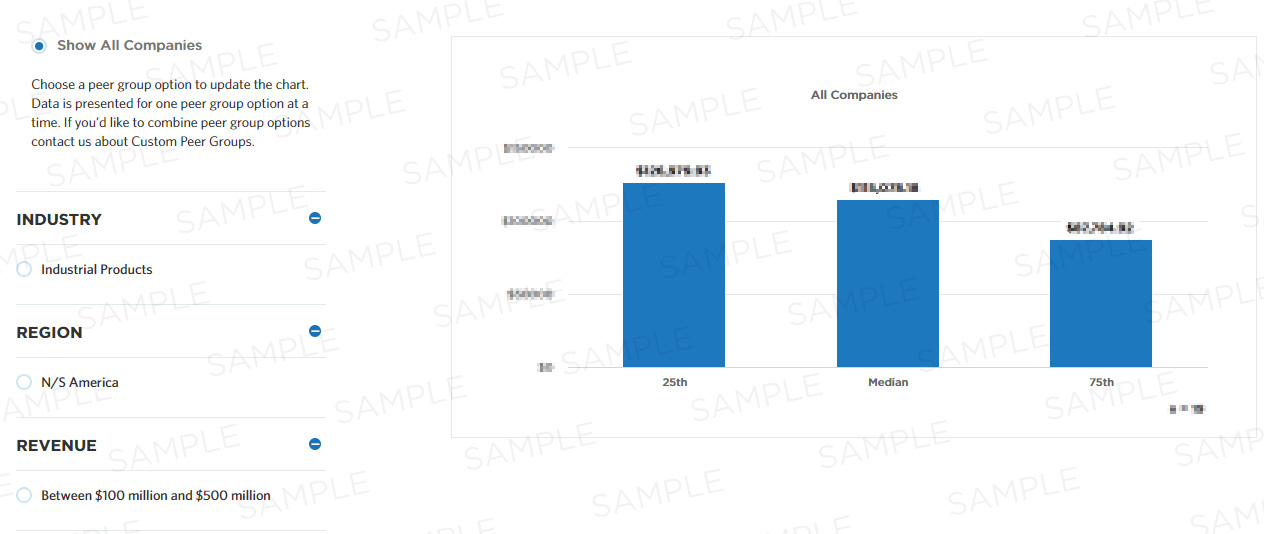
Learn about Membership| 25th | Median | 75th |
|---|---|---|
| - | $2.52 | - |
Indicator:
Compute this Measure
Units for this measure are dollars.
Total cost to perform the function "develop and manage human capital" / (Total business entity revenue * 0.001)
Key Terms
Total cost for a process, process group, or function consists of the following five components.
Internal/In-house operating cost consists of the first four components (personnel, systems, overhead, and other).
Personnel Cost
Personnel cost is the cost associated with personnel compensation and fringe benefits of employees (i.e., those classified as FTEs which includes both full-time and salaried/hourly employees) contributing to each respective process. Personnel cost should include all of the following costs.
Employee Compensation: Includes salaries and wages, bonuses, overtime and benefits.
Fringe: Includes contributions made towards the employees' government retirement fund, workers compensation, insurance plans, savings plans, pension funds/retirement plans, and stock purchase plans. This should also include special allowances, such as relocation expenses and car allowances.
Systems Cost
Systems costs include all expenses, paid or incurred, in conjunction with:
Computer hardware or computer software acquired by the organization or provided to the organization through service contracts.
Any related costs to process, service and maintain computer hardware or computer software. The costs of providing and maintaining services for each applicable process (e.g., computer system(s) processing (CPU) time, network/system communication charges, maintenance costs for applications and data storage). This includes the costs related to LANs, WANs, etc. This does not include one-time costs for major new systems developments/replacements. Consultant fees should not be included in depreciation of new system implementations. Include only those costs that occur more than six (6) months after implementation, as normal system maintenance costs. Any systems cost (e.g., maintenance) which is outsourced to a third party supplier should be captured in the separate cost category labeled outsourced cost.
Systems cost should include all salaries, overtime, employee benefits, bonuses or fees paid to full-time, part-time or temporary employees or independent contractors who perform services relating to computer hardware, computer software, processing or systems support.
Overhead Costs
For the purpose of this study, provide the total actual overhead costs for the year related to the specified process. These are costs that cannot be identified as a direct cost of providing a product or a service. Include the primary allocated costs such as occupancy, facilities, utilities, maintenance costs, and other major costs allocated to the consuming departments. Exclude systems costs that are allocated, since these will be captured separately as systems cost.
Other Cost
Other costs are costs associated with the specified process, but not specifically covered in personnel cost, systems cost, overhead cost and outsourced cost in this questionnaire. These other costs include costs for supplies and office equipment, travel, training and seminars. Include the cost of telephones, except for that portion captured in systems cost.
External/Outsourced Cost
In determining outsourced cost, include the total cost of outsourcing all aspects of the specified process to a third-party supplier. Exclude one-time charges for any type of restructuring or reorganization. Outsourced costs should also include costs for intracompany outsourcing (i.e., reliance on a shared services center or other business entity).
Total annual revenue is net proceeds generated from the sale of products or services. This should reflect the selling price less any allowances such as quantity, discounts, rebates and returns. If your business entity is a support unit and therefore does not directly generate revenue, then provide the revenue amount for the units you support. For government/non-profit organizations, please use your non-pass-through budget. For insurance companies the total annual revenue is the total amount of direct written premiums, excluding net investment income. Note: Business entity revenue needs to only include inter-company business segment revenue when the transactions between those business segments are intended to reflect an arm's length transfer price and would therefore meet the regulatory requirements for external revenue reporting.
Cost effectiveness measures are those in which two related variables, one of which is the cost and one of which is the related outcome related to the expenditure are used to determine a particular metric value.
The metric value which represents the 50th percentile of a peer group. This could also be communicated as the metric value where half of the peer group sample shows lower performance than the expressed metric value or half of the peer group sample shows higher performance than the expressed metric value.
Measure Scope
Cross Industry (8.0)
-
7.1 - Develop and manage human resources (HR) planning, policies, and strategies (17043) - Creating strategies for the HR function. Create and implement strategies for managing the work force. Supervise and enhance the strategies, plans, and policies supporting the HR function. Developing models for managing competency levels of the HR of the organization.
-
7.1.1 - Develop human resources strategy (20958) - Creating a long-term plan that strategically aligns human resources with the company's goals. The HR function's focus is to ensure the organization has the necessary talent and capabilities to achieve its objectives, sustain its competitive advantage, and reduce employee turnover.
-
7.1.1.1 - Identify strategic HR needs (10418) - Strategically defining the current and future needs for developing an efficient HR strategy.
-
7.1.1.2 - Define HR and business function roles and accountability (10419) - Outlining the charge and duty of the HR function by defining its responsibility areas, as well as ensuring its accountability. Establish the HR function by laying out the roles and responsibilities for this function and the rules and regulations guiding HR. Define the goals and objectives of the HR, as well as a mission and vision for this function. Create a mechanism involving a set of policies, code of conduct, and institutional procedure to ensure HR accountability.
-
7.1.1.3 - Determine HR function roles and structure (21430) - Establishing the roles that are required to execute the HR function. This process also examines the organizational structure required to support the organization.
-
7.1.1.4 - Determine HR delivery model (21431) - Determining how an organization's human resources department offers services to and interacts with employees.
-
7.1.1.5 - Determine HR costs (10420) - Ascertaining the costs and expenses of the HR function. Identify and report HR investments using, for example, a cost approach or a present value of future earnings approach.
-
7.1.1.6 - Establish HR measures (10421) - Evaluating the performance of HR function. Lay out the course of HR procedures that would formulate a plan of action needed to fulfill strategic HR needs. Deploy measures such as hiring policies, leave management, internal code of conducts, and compensation structure.
-
7.1.1.7 - Communicate HR strategies (10422) - Conveying the strategies of HR function to employees and management. Effectively explain the vision, plans, and anticipated benefits of the HR strategy to employees, as well as the public. Develop statements and messages that are easy to read, informative, and relevant to the audience.
-
7.1.1.8 - Develop strategy for HR systems/technologies/tools (10432) - Creating a strategy for the use of systems/technologies/tools in operating the HR function. This is inclusive of all forms of new and evolving technology such as artificial intelligence (AI). Create a strategy concerning the use and utility of HR support tools and technologies. Decide what specific tools to use and in what quantity. Determine the levels of technology required for the HR management.
-
7.1.1.9 - Manage employer branding (20606) - Creating, maintaining and communicating company's reputation and values to keep current employees and attract potential hires.
-
7.1.1.10 - Design the employee experience (21639) - Designing the intended end-to-end employee experience across key moments in the employee lifecycle to support engagement, performance, retention, and alignment with organizational culture and workforce objectives.
-
-
7.1.2 - Develop and implement workforce planning, policies, and strategies (17045) - Creating and executing strategies and policies for smooth administration of workforce. Determine and gather skill requirements. Plan the requirements for employee resourcing per unit. Create compensation, succession, HR program, and employee diversity plans. Develop and administer policies for HR. Develop benefits for employees. Create models for work force strategies.
-
7.1.2.1 - Perform strategic workforce planning (21693) - Evaluating the current and future skill requirements of the organization with regard to the overall corporate strategy of the organization and market conditions. Identify and establish the minimum skills needed for the requisite HR needs.
-
7.1.2.1.1 - Develop and manage strategic workforce planning framework (21640) - Defining and maintaining the structure, principles, and approaches used to assess workforce supply and demand, capabilities, and gaps over the strategic planning horizon.
-
7.1.2.1.2 - Perform business unit workforce planning (10424) - Determining the requirements for employees and the need for employee resourcing for each unit/function. Lay out a plan detailing employee resourcing requirements of individual functions and the organization as a whole.
-
7.1.2.1.3 - Advise business in implementing strategic workforce planning (21641) - Providing guidance and expertise to business leaders on applying the strategic workforce planning framework to inform workforce decisions, plans, and initiatives.
-
7.1.2.1.4 - Partner with the business to execute workforce plan (21642) - Collaborating with business leaders to translate workforce plans into actionable initiatives and to support execution of agreed workforce actions.
-
7.1.2.1.5 - Monitor and adjust strategic workforce plan (21643) - Tracking workforce outcomes and changes in business needs to update workforce plans and address emerging gaps, risks, or opportunities.
-
-
7.1.2.2 - Develop total compensation and rewards strategy (10425) - Designing a plan that specifies the combination of wages, salaries, and benefits the employees receive in exchange for work. Define the total amount of compensation, in addition to the manner in which the compensation is paid and the purposes for which employees can receive bonuses, salary increases, incentives and non-monetary rewards.
-
7.1.2.2.1 - Establish wages, salaries, and benefits strategy (21644) - Defining the strategic approach for wages, salaries, and benefits to support workforce attraction, retention, performance, and alignment with organizational objectives and market conditions.
-
7.1.2.2.2 - Establish incentive strategy (10210) - Creating a scheme of rewards and recognition for employees to promote a results-based culture. Create specific incentives to reach desired outcomes, such as landing key clients, growing the customer base, providing exceptional servicing, and increasing profit margins.
-
7.1.2.2.3 - Establish a severance pay strategy (21645) - Defining the approach to severance pay, including principles and guidelines, to support workforce transitions while managing financial, legal, and reputational considerations.
-
-
7.1.2.3 - Develop succession plan (10426) - Creating and implementing the plan for continuation of key positions within the organization. Identify internal people with the potential to fill key business leadership positions. Provide critical development experiences to employees who can move into important roles. Engage leaders to support the development of high-potential leaders.
-
7.1.2.4 - Develop high performers/leadership programs (16938) - Creating a program that incorporates incentives and compensation put forth by the organization to recognize high performing workers and excellence in leadership.
-
7.1.2.5 - Develop diversity, equity, and inclusion plan (10427) - Creating and implementing the plan for ensuring a diverse work force. Develop and hire employees with varying characteristics including, but not limited to, religious and political beliefs, gender, ethnicity, education, socioeconomic background, sexual orientation, and geographic location.
-
7.1.2.6 - Implement diversity, equity, and inclusion plan (21433) - Execution of diversity, equity, and inclusion plans within an organization. Often called a DEI plan.
-
7.1.2.7 - Design talent acquisition program (11623) - Developing a program to entice prospective resources to engage with the organization for a position of employment.
-
7.1.2.8 - Design talent development program (11622) - Identifying skills, knowledge, and attributes that need enhancement in order to perform a job. Develop the appropriate training programs. These programs can be computer-based, classroom, or on-the-job training, etc.
-
7.1.2.9 - Develop other HR programs (10428) - Creating HR programs and services such as employee engagements programs to promote positive employee behavior. Create a variety of programs and services to support employees' professional and personal needs at work and at home.
-
7.1.2.10 - Develop HR policies (10429) - Creating rules and regulations that govern the HR function. Develop a policy plan that serves as a guideline for setting rules and regulations that help in achieving the HR goals and objectives.
-
7.1.2.11 - Administer HR policies (10430) - Ensuring rules and regulations are followed and are flexible enough to accommodate indispensable deviations.
-
7.1.2.12 - Plan employee benefits (10431) - Planning benefits in kind (also called fringe benefits, perquisites, or perks). Include various types of non-wage compensations provided to employees in addition to normal wages or salaries.
-
7.1.2.13 - Develop workforce strategy models (10433) - Creating and implementing models for effectively strategizing the work force of the organization. Develop a model that specifies the organization's overall approach for maximizing the performance of its work force by defining the goals, objectives, and expectations of the work force. Manage all aspects of performance required for the work force to function, including recruitment, selection, retention, and professional development.
-
7.1.2.14 - Implement workforce strategy models (20122) - Implementing models for effectively strategizing the work force of the organization. Carry out all aspects of performance required for the work force to function, including recruitment, selection, retention, and professional development.
-
7.1.2.15 - Manage job families (21432) - Overseeing a group of similar individual or teams with similar education, skills, training, or experience.
-
7.1.2.16 - Develop and maintain job descriptions (10447) - Creating descriptions for job requisitions. Define the normal components of a job description, such as the overall position description with general areas of responsibility listed, essential functions of the job described with a couple of examples of each, required knowledge, skills, abilities, required education and experience, a description of the physical demands, and a description of the work environment.
-
-
7.1.3 - Monitor and update HR strategies, plans, and policies (10417) - Supervising the HR and workforce strategy, plans, and policies in order to refurbish them whenever needed. Determine the performance of HR and workforce plans and policies by measuring the objective achievement rate and its contribution to the overall business strategy. Ensure that information about these plans and strategies is effectively communicated to various stakeholders. Incorporate any suggestions by these stakeholders when revising HR and workforce plans and policies.
-
7.1.3.1 - Measure realization of HR objectives (10434) - Determining the accomplishment of HR and workforce goals and objectives. Evaluate the effectiveness of the HR function by estimating the present rate of achievement of the established objectives. Use metrics to determine if the objectives are being realized. Leverage measures such as turnover, training, return on human capital, costs of labor, and expenses per employee.
-
7.1.3.2 - Measure contribution of HR to business strategy (10435) - Determining the role of the HR function in implementing the organizational strategy. Measure the correlation between the HR and workforce performance and the overall business strategy. Calculate the amount of contribution of the HR function to the overall business growth.
-
7.1.3.3 - Communicate HR plans and provide updates to stakeholders (10436) - Conveying the plans for HR function to stakeholders. Ensure that the HR plans and strategy are effectively communicated to the people who can affect or be affected by the organization's actions, objectives, and policies such as the creditors, shareholders, employees, and suppliers. Provide regular updates to these stakeholders to ensure effective communication.
-
7.1.3.4 - Review and revise HR plans (10438) - Reassessing the strategies, plans, and policies of the HR function, with the objective of revising them. Revisit the schematic plans for the HR function. Taking stock of any suggestions or feedback from the stakeholders, revamp the blueprint of HR strategies and plans.
-
-
7.1.4 - Develop competency management models (17046) - Creating and implementing the tools for managing the competency levels of HR. Design a model for integrating HR planning with business planning. Assess current HR capacity based on the competencies against the capacity needed to achieve the vision, mission, and business goals of the organization. Consider factors such as employee development, career path, compensation policies, and performance management.
-
-
7.2 - Recruit, source, and select employees (10410) - Determining and handling employee requirements. Recruit or source the candidates as per the requirements. Screen and select the most appropriate candidates. Take care of the newly hired and re-hired employees. Maintain records of information for all applicants.
-
7.2.1 - Manage employee requisitions (21698) - Handling the requirements for new employees. Create and open job requisitions by clearly defining the job descriptions. Post these requirements internally and externally, and modify them as appropriate. Manage the dates of the whole requisition process.
-
7.2.1.1 - Align staffing plan to work force plan and business unit strategies/resource needs (10445) - Creating a correspondence between the plan for hiring new employees and the desired employee requirements. Staff an adequate amount of people with the appropriate skills to effectively accomplish its legislative, regulatory, service, and production requirements.
-
7.2.1.2 - Open job requisitions (10446) - Developing specific job requisitions, and ensuring their accessibility. Create and open a job requisition to fill the vacant positions within the organization. Clearly describe the job title, department, fill date, and the requisite skills and qualifications for the job.
-
7.2.1.3 - Approve job requisition (21697) - Reviewing and authorizing requests to fill positions to ensure alignment with workforce plans, budget constraints, and organizational approval requirements
-
7.2.1.4 - Post job requisitions (10448) - Posting and advertising job descriptions. Display open job descriptions internally and externally. Use public portals, online portals, and websites to upload these requisitions in order for applications to be received.
-
7.2.1.5 - Modify job requisitions (10450) - Making the necessary alterations to job requisitions. Revamp or revise the job requisitions in case a position is filled or is not vacant anymore, as well as in case of any new openings. (It involves Manage the internal/external job posting websites [10449] to make the necessary changes.)
-
7.2.1.6 - Notify hiring manager (10451) - Informing and communicating with the hiring manager. Notify the manager responsible for the hiring process in cases of any new position openings or changes.
-
7.2.1.7 - Manage requisition dates (10452) - Determining and managing the dates for the employee requisition process.
-
-
7.2.2 - Recruit/Source candidates (10440) - Recruiting new candidates for deployment across various functional areas inside the organization. Select methods for sourcing new employees. Manage relationships with third-party agencies. Stage recruitment fairs and drives. Manage employee referral programs.
-
7.2.2.1 - Determine recruitment methods and channels (10453) - Defining the methods and channels for recruitments in order to maximize the amount of candidate availability. Use channels such as headhunting, job postings, job portals, networking websites, and media advertising. Choose from the various methods of recruitment such as internal/external third-party sourcing.
-
7.2.2.2 - Perform recruiting activities/events (10454) - Organizing and executing recruiting activities and events. Activities and events include on-campus hiring, refresher courses, information sessions, career fairs, etc. to increase the coverage of the sourcing in order to ensure that the most deserving and appropriate candidates are hired.
-
7.2.2.3 - Develop and maintain candidate pool (21699) - Cultivating relationships with potential job candidates even when there are no immediate openings. Building the talent pipeline for potential future hiring needs.
-
7.2.2.4 - Manage recruitment vendors (10455) - Establishing and maintaining relationships with recruitment vendors (suppliers). Create and maintain relationships with third-party agencies such as staffing and firms to expand. Use these relationships to implement the sourcing process effectively.
-
7.2.2.5 - Manage employee referral programs (17047) - Creating and managing a recruiting strategy where current employees are rewarded for referring qualified candidates for employment.
-
7.2.2.6 - Manage recruitment channels (17048) - Establishing and maintaining internal and external channels for recruiting. Extract the best out of every recruitment channel. Manage all the processes related to all the sourcing channels including maintaining career pages on the organization website.
-
-
7.2.3 - Screen and select candidates (20123) - Evaluating and selecting potential employees through interviews, tests, etc.
-
7.2.3.1 - Identify and deploy candidate selection tools (10456) - Identifying and implementing tools for the selection of candidates. Recognize candidate selection tools such as screening, telephone interviews, hiring manager interviews, drug testing, and skills assessment. Effectively deploy these tools to check if the candidates fit in the workplace or not, as well as to ensure workplace safety.
-
7.2.3.2 - Interview candidates (10457) - Assessing the candidates by their performance in the interviews. Conduct HR interview, technical interview, hiring manager interview, etc. Understand the mindset of the candidate, and comprehend his/her personal and professional lives.
-
7.2.3.3 - Test candidates (10458) - Examining the candidates through tests. Prepare tools such as aptitude, technical, and grammar tests. Test the skills of the candidate through a written, oral, or computerized test.
-
7.2.3.4 - Select and reject candidates (10459) - Approving the deserving candidates, and rejecting the others. Examining the performance of candidates. Ensure candidates would fit well with the organization. (Assess performance from Interview candidates [10457] and Test candidates [10458].)
-
-
7.2.4 - Manage new hire/re-hire (10443) - Creating and making job offers to the selected candidates. Fairly negotiate the job offers. Agree on terms with the candidate to complete the hiring process.
-
7.2.4.1 - Draw up and make offer (10463) - Compiling job-related information for the selected candidates in order to make up a job. Include information about the job description, reporting relationship, salary, bonus potential, benefits, and vacation allotment.
-
7.2.4.2 - Negotiate offer (10464) - Negotiating an offer with selected candidates. Discuss the job offer with the candidate to ensure a mutual understanding.
-
7.2.4.3 - Hire candidate (10465) - Wrapping up the process for hiring candidates. Agree to all hiring terms and conditions. Have the candidate accept and sign the job offer.
-
-
7.2.5 - Manage applicant information (10444) - Creating and maintaining a system for managing the information of applicants. Create records for all candidates who apply. Maintain and track information through the use applicant-tracking systems.
-
7.2.5.1 - Obtain candidate background information (10460) - Conducting a background investigation on the candidates with the objective of gathering and compiling criminal, commercial, medical, and financial information.
-
7.2.5.2 - Create applicant record (10466) - Creating and documenting the records of all applicants. Manage all individual applicants, including hires and non-hires. Maintain records to avoid any duplication and promote efficiency.
-
7.2.5.3 - Manage/Track applicant data (10467) - Keeping track of all the information about the candidates who apply for jobs. Use applicant-tracking systems that can be accessed online as a central location and database for recruitment efforts.
-
7.2.5.3.1 - Complete position classification and level of experience (20124) - Identifying the requirements for the position to be filled. Determine the experience and skills necessary to perform the tasks outlined.
-
-
7.2.5.4 - Archive and retain records of non-hires (10468) - Retaining and storing the records of the candidates who were rejected and not hired to ensure future availability in case the need arises. Create a centralized repository of profiles. Label these records in order to readily identify them. Add remarks for any future consideration.
-
-
-
7.3 - Manage employee onboarding, training, and development (20599) - Assisting employees in developing their capabilities, and providing them counseling services. Handle the orientation and deployment of the employees. Administer the performance of employees. Administer the development and enhancement of the employees. Provide training and development programs for employees.
-
7.3.1 - Manage employee onboarding (10469) - Creating and maintaining various employee on-boarding programs typically known as induction programs in order to ensure that the new employees are effectively introduced to the organization and its existing employees. Examine and evaluate the performance of these induction programs. Execute these programs on the ground level.
-
7.3.1.1 - Develop employee onboarding program (10474) - Creating and maintaining a mechanism through which new employees acquire the necessary knowledge, skills, and behaviors to become effective organizational members and insiders. Conduct formal meetings, lectures, videos, printed materials, and/or computer-based orientations to introduce newcomers to their new jobs and the organization.
-
7.3.1.2 - Implement employee onboarding program (17050) - Bringing the employee on-boarding program into effect. Implement Develop employee onboarding program [10474]. Conduct training sessions and employee engagement programs.
-
7.3.1.3 - Monitor and update employee onboarding program (11243) - Assessing the performance and effectiveness of employee on-boarding program. Examine the performance of on-boarding program through feedback and reviews from the new employees. Create web and written forms. Obtain information through face-to-face discussions.
-
-
7.3.2 - Manage employee performance (10470) - Defining individual performance objectives. Review performance in order to provide appraisals. Evaluate the efficiency and effectiveness of the current performance program. Update it regularly.
-
7.3.2.1 - Define employee performance objectives (10479) - Outlining the objectives for employee performance. Establish key performance objectives and measures such as customer-focus objectives, financially focused objectives, and employee growth objectives.
-
7.3.2.2 - Review employee performance (21434) - Execution of employee reviews/performance on a frequent basis. May include ongoing feedback and coaching activities.
-
7.3.2.3 - Document employee performance (21435) - Document the results of both formal reviews to include both positive and negative feedback and commentary. May include acknowledgement by involved parties.
-
7.3.2.4 - Monitor and update performance program (10481) - Assessing and revamping performance programs, including the instruments used to measure employee performance standards. Review and upgrade these performance programs to avoid any deprivations and ensure effectiveness.
-
-
7.3.3 - Manage employee career development (21700) - Establishing employee development guidelines. Lay out career paths and plans for individual employees. Manage the development of their skills to enhance their skills, ability, and knowledge.
-
7.3.3.1 - Define employee development guidelines (10487) - Outlining the guidelines for development of employees. Design development policies and procedures to identify areas of growth for employees, either in their current position or in preparation for future roles. Include topics related to knowledge and skill development.
-
7.3.3.2 - Develop employee career plans and career paths (10488) - Designing a future career path for the employees that encourages them to explore and gather information.
-
7.3.3.3 - Manage employee skill and competency development (17051) - Administering the development of employee skills. Conduct training, coaching and mentoring, job-rotation and cross training, lateral moves, etc. Maintain records of employee skills and competencies.
-
7.3.3.4 - Establish succession plans (21701) - Establishing plans to ensure continuity in critical roles by identifying potential successors and preparing them for future leadership or specialist positions.
-
7.3.3.4.1 - Identify critical roles (21702) - Determining roles that are essential to organizational performance or continuity and that require succession planning.
-
7.3.3.4.2 - Select potential successors (21703) - Identifying and selecting employees with the potential to assume critical roles based on defined criteria and future capability requirements.
-
7.3.3.4.3 - Develop and implement individual succession plans (21704) - Creating and executing development plans for identified successors to prepare them for future roles through targeted learning and experience opportunities.
-
7.3.3.4.4 - Review and update succession plans (21705) - Reviewing succession plans on a regular basis and updating them to reflect changes in roles, talent, organizational priorities, and performance outcomes.
-
-
-
7.3.4 - Develop and train employees (10473) - Establish organizational development needs for employees. Creating a link between employee and organizational development needs.
-
7.3.4.1 - Align organizational development needs to employees (21706) - Identifying the skills, competencies, and knowledge required by the organization to achieve its strategic goals and ensuring employees' growth directly contributes to achieving those goals.
-
7.3.4.2 - Define employees competencies and skills (16940) - Defining the skills, knowledge, abilities, and attributes needed to achieve the desired core capabilities and competencies of the organization.
-
7.3.4.3 - Align learning programs with competencies and skills (10491) - Aligning the learning programs with the core capabilities and competencies of the organization. Contextualize the training programs so that employees can expand their knowledge base and add new skills in line with the core competencies of the organization.
-
7.3.4.4 - Establish training needs by analysis of required and available skills (10492) - Determining the training necessitated by business processes, using an examination of skill sets that are needed by the organization and those already possessed. Examine the various skills required by individual employees. Design training in light of the availability of resources to provide specific segments of training.
-
7.3.4.5 - Develop, conduct, and manage employee training programs (10493) - Creating, implementing, and managing the programs for training employees. Create and design sessions on the basis of the needs and the availability of the skills. Conduct the sessions in person or virtually. Manage all aspects related to the training programs. Consider including literacy training, interpersonal skills training, technical training, problem-solving training, diversity or sensitivity training, etc.
-
7.3.4.6 - Manage examinations and certifications (20125) - Managing identified training programs for employees. Engage with industries to provide certifications, administer certification test, and maintain active certification.
-
7.3.4.6.1 - Liaise with external certification authorities (20126) - Coordinating with third party certification authorities to provide training and certifications for necessary skills.
-
7.3.4.6.2 - Administer certification tests (20127) - Providing tests to the workforce that will satisfy completion of certifications.
-
7.3.4.6.3 - Appraise experience qualifications (20128) - Ascertaining the experience level needed to qualify for a specific job or certification within the organization. Some certificates require practical experience as well as training programs.
-
7.3.4.6.4 - Administer certificate issue and maintenance (20129) - Administering certificates to all candidates that have successfully met experience qualifications, and passed all tests necessary to obtain the certificate.
-
-
7.3.4.7 - Monitor and evaluate learning programs (21436) - Oversight of the organization's learning programs. This process also includes the effectiveness of these programs.
-
-
-
7.4 - Manage employee relations (17052) - Assisting general management in developing, maintaining, and improving employee relationships. This is accomplished through communication, performance management, processing grievances, and/or dispute. Interpret and convey organizational policies.
-
7.4.1 - Manage labor relations (10483) - Managing labor relations, the collective bargaining process, and the relationships between the labor and management. Take care of employee grievances.
-
7.4.2 - Manage collective bargaining process (10484) - Managing any negotiations between an employer and a group of employees that determine the conditions of employment. Engage employees to reach agreements in regulating working conditions.
-
7.4.3 - Manage labor management partnerships (10485) - Handling partnerships between labor and management. Develop a lasting two-way relationship that is beneficial for the labor, management, and the organization.
-
7.4.4 - Manage employee grievances (10531) - Taking care or resolving any complaint raised by an employee by procedures provided for in a collective agreement, an employment contract, or by other mechanisms established by an employer.
-
7.4.5 - Monitor legal and regulatory environment (21437) - Awareness of the employee legislature that is in place for the organization. The regulatory environment could include areas, regions, countries, or technologies (around AI, for example).
-
-
7.5 - Reward and retain employees (10412) - Creating frameworks for rewarding and recognizing employees with the objective of retaining them. Create and manage programs for provision of rewards, recognition, and motivation. Manage and administer the benefits for employees. Help assist and retain employees. Administer payroll to employees.
-
7.5.1 - Develop and manage reward, recognition, and motivation programs (21438) - Developing a salary/compensation structure and plan; developing a benefits and reward plan; develop commission plan; performing competitive analyses of benefits and rewards; identifying compensation requirements based on compensation, benefits, and HR policies; administering compensation, commission, and rewards to employees; and rewarding and motivating employees.
-
7.5.1.1 - Develop salary/compensation structure and plan (10498) - Creating the framework for the provision of salary/compensation to employees. Break down the salary structure into different components such as fixed pay, variable pay, bonus, and allowances such medical allowance, and rent allowance, etc. Develop, adjust, and maintain a pay structure.
-
7.5.1.2 - Develop benefits and rewards plan (10499) - Developing a plan for provision of rewards, commission, and benefits to employees. Plan health benefits, retirement benefits, wellness plans, and non-monetary benefits, etc.
-
7.5.1.3 - Perform competitive analysis of benefits and rewards (10500) - Analyzing and evaluating the organization's benefits and rewards plan. Compare/Benchmark the benefits and employees plan with other organizations to adhere to industry standard practices.
-
7.5.1.4 - Identify compensation requirements based on financial, benefits, and HR policies (10501) - Recognizing the employee requirements for compensation on the basis of the financial, benefits, and HR policies of the organization. Recognize individual compensation requirements regarding the financial policies of the organization. Consider the benefits plan and overall HR policies while selecting compensation requirements.
-
7.5.1.5 - Administer compensation and rewards to employees (10502) - Managing the provision of compensations and rewards to the employees while maintaining consistency with the compensation and benefits plan. Follow the compensation and benefits plan rigorously in order to avoid any discrepancies.
-
7.5.1.6 - Reward and motivate employees (10503) - Rewarding and stimulating the performance efforts of employees. Create methods for motivating employees. Spur extrinsic and intrinsic motivation.
-
7.5.1.7 - Review engagement and retention indicators (10510) - Reassessing the indicators for retention and motivation of employees. Monitor the indicators that signal the levels of motivation and retention. Regularly update and upgrade indicators to avoid depreciation and ensure high efficiency.
-
7.5.1.8 - Review compensation plan (10511) - Analyzing existing compensation plans and making changes necessary to continue to retain employees.
-
7.5.1.9 - Review benefits and rewards plan (21708) - Evaluating benefits and rewards plans to assess effectiveness, alignment with workforce needs, and consistency with organizational reward and recognition objectives.
-
-
7.5.2 - Manage and administer benefits (10495) - Managing and ensuring benefits enrollment by the employees. Process any benefit claims made by the employees. Balance the estimated amount and entitled amount of benefits.
-
7.5.2.1 - Deliver employee benefits program (10504) - Implementing the programs that specify employee benefits, other than salary provided, such as those concerning medical care, death, and disability.
-
7.5.2.2 - Administer benefit enrollment (10505) - Handling the employee enrollment for obtaining benefits. Manage employee enrollment and eligibility, including work and life status/event changes. Encourage employees to enroll for benefits.
-
7.5.2.3 - Process benefits claims (10506) - Processing any formal requests or demands made by the employees claiming that they have earned some benefits. Includes escalation to management.
-
7.5.2.4 - Perform benefit reconciliation (10507) - Carrying out reconciliation of benefits delivered to employees. Compare the estimated benefit requirement made by the employee and the actual amount of benefits the employee is entitled to receive.
-
-
7.5.3 - Manage employee assistance and retention (21439) - Managing activities centered around delivering programs to support work/life balance for employees; developing family support systems; reviewing retention and motivation indicators; and reviewing compensation plans.
-
7.5.3.1 - Deliver programs to support work/life balance for employees (10508) - Designing programs that prompt proper balance between work (i.e., career and ambition) and lifestyle (i.e., health, pleasure, leisure, family, and spiritual development/meditation). Account for dependent care, flexible working arrangements, leaves of absence, on-the-job training, etc.
-
7.5.3.1.1 - Manage flexible working (21440) - Creation and execution of a plan that might allow for work from home days, or alternate hours.
-
7.5.3.1.2 - Manage transportation programs and services (21709) - Managing transportation-related programs and services provided to employees to support commuting, mobility, and work/life balance objectives.
-
-
7.5.3.2 - Develop employee and family support systems (10509) - Creating a support structure that aligns with local and federal laws that allow for support for families. This could include things like maternity leave, care for a family member, or in some cases, extended sick leave.
-
-
7.5.4 - Administer Payroll (10497) - Managing the sum of all financial records of salaries for an employee, including wages, bonuses, and deductions. Use a payroll management system to deal with the financial aspects of employees' salaries, allowances, deductions, gross pay, net pay, etc. Generate pay slips for a specific period.
-
7.5.5 - Manage/Collect employee suggestions and perform employee research (10530) - Procuring and handling suggestions from employees, and performing research on employees. Manage and analyze the programs that help the organization to tap into employee ideas for improving the organization's processes and/or products. Use surveys, focus groups, and other data-gathering methods to find out the attitudes, opinions, and feelings of members of an organization.
-
-
7.6 - Redeploy and retire employees (10413) - Managing employee mobility and retirement. Manage the process of employee promotion and demotion. Administer separation, retirement, and leaves of absence. Outplace employees. Deploy personnel. Relocate employees in order to manage assignments.
-
7.6.1 - Manage promotion and demotion process (10512) - Administering the process of promoting and demoting employees. Design a system for advancing or demoting an employee's rank or position. Leverage techniques such as horizontal promotion, vertical promotion, dry promotion, and involuntary/voluntary demotion.
-
7.6.2 - Manage separation (10513) - Managing the process of employee separation, including leaves of absence, resignations, discharges, and layoffs. Inform the employee of the termination. Complete paperwork for continuation of benefits. Enter employment status change into system.
-
7.6.2.1 - Manage retirement (10514) - Managing and administering instances where a person stops employment completely.
-
7.6.2.2 - Manage leave of absence (10515) - Managing the period of time that an employee must be away from their primary job, while maintaining the status of employee (i.e., paid and unpaid leave of absence but not vacations, holidays, hiatuses, sabbaticals, and work-from-home programs).
-
7.6.2.3 - Manage offboarding (21710) - Coordinating activities related to employee departures, including transitions, knowledge transfer, and administrative actions, to support orderly and compliant workforce exits.
-
7.6.2.4 - Develop and implement employee outplacement (10516) - Helping former employees transition to new jobs or to re-orient themselves in the job market. Deliver help through one-on-one sessions or in a group format. Provide guidance in career evaluation, resume writing, interview preparation, developing networks, and job searching.
-
-
7.6.3 - Relocate employees and manage assignments (17055) - Managing the relocation of employees in order to carry out assignments. Manage internal business processes to transfer employees, their families, and/or entire departments of a business to a new location.
-
7.6.3.1 - Manage expatriates (10520) - Manage employees who are sent to live abroad or hired from abroad for a defined time period.
-
-
-
7.7 - Manage employee information and analytics (17056) - Managing the employee reporting processes, employee inquiry process, employee information and data, and the HR information systems. Create and administer the employee metrics. Develop and handle the time and attendance systems. Refurbish the indicators for employee retention and motivation.
-
7.7.1 - Manage reporting processes (10522) - Providing information and reports regarding employees to management.
-
7.7.2 - Manage employee inquiry process (10523) - Handling instances where an employee believes that he/she has been inappropriately treated or he/she desires clarification. Encourage employees to inquire when needed. Record and clarify the issues for which the enquiry has been made.
-
7.7.3 - Manage and maintain employee data (10524) - Capturing and updating employee information and data and information on the employees.
-
7.7.4 - Manage human resource information systems (10525) - Administering and maintaining HR information systems that take care of activities related to HR, accounting, management, and payroll.
-
7.7.5 - Develop and manage employee measures (10526) - Creating and maintaining performance metrics for employees. Create and manage a strategic system of data and statistics to accurately gauge each employee's information. Consider productivity metrics, efficiency metrics, training metrics, etc.
-
7.7.6 - Develop and manage time and attendance systems (10527) - Developing and maintaining systems for managing the time and attendance of employees. Routinely upgrade the process and systems that track when employees start and stop work, the department where the work is performed, attendance in addition to tracking meals and breaks, the type of work performed, and the number of items produced.
-
7.7.7 - Develop workforce analytics (21441) - Understand, develop, and gather workforce data in support of stakeholder requirements.
-
7.7.7.1 - Determine stakeholder requirements (21442) - Collect and manage requirements from various enterprise stakeholders about workforce analytics.
-
7.7.7.2 - Identify research questions (21443) - Summarize stakeholder requirements into discrete research questions in support of workforce analytics.
-
7.7.7.3 - Select workforce analysis methodology (21444) - Consider stakeholder requirements, research questions, and organizations standards around research to select appropriate research methodology in support of workforce analytics.
-
7.7.7.4 - Identify workforce data sources (21445) - Identify appropriate data sources for workforce analytics data while considering organizational standards for data sources.
-
7.7.7.5 - Gather workforce data (21446) - Collect and procure, as needed, workforce data from internal and external data sources in support of workforce analytics.
-
-
7.7.8 - Implement workforce analytics (21447) - Transform, develop, and communicate workforce data into analytics in support of organizational requirements.
-
7.7.8.1 - Transform workforce analysis data (21448) - Logically and statistically validate collected or purchased data in support of analytics needs
-
7.7.8.2 - Develop insights into workforce analytics outcomes (21449) - Synthesize insights from workforce analytics data
-
7.7.8.3 - Communicate workforce analysis outcomes (21450) - Summarize, package, and distribute results of workforce analysis.
-
-
-
7.8 - Manage employee communication (21451) - Creating an effective plan that initiates and promotes communication and engagement among the employees and between employees and management.
-
7.8.1 - Develop employee communication plan (10529) - Creating a plan for managing communication among employees. Inform employees of direction. Counter resistance with change management approaches. Seek specific areas of input to the decision-making process. Seek varying degrees of involvement and co-creation.
-
7.8.2 - Conduct employee engagement surveys (16944) - Questioning employees to ascertain overall workplace satisfaction.
-
7.8.3 - Deliver employee communications (10532) - Implementing the communication plan for employees. Initiate dialogues and engagement by monitoring the exchange of ideas and opinions, the development of personal relationships, etc.
-